Spider Plant
Chlorophytum comosum
Indestructible and non-toxic: produces babies on long stalks, perfect to gift. Air-purifying. Ideal for households with pets.
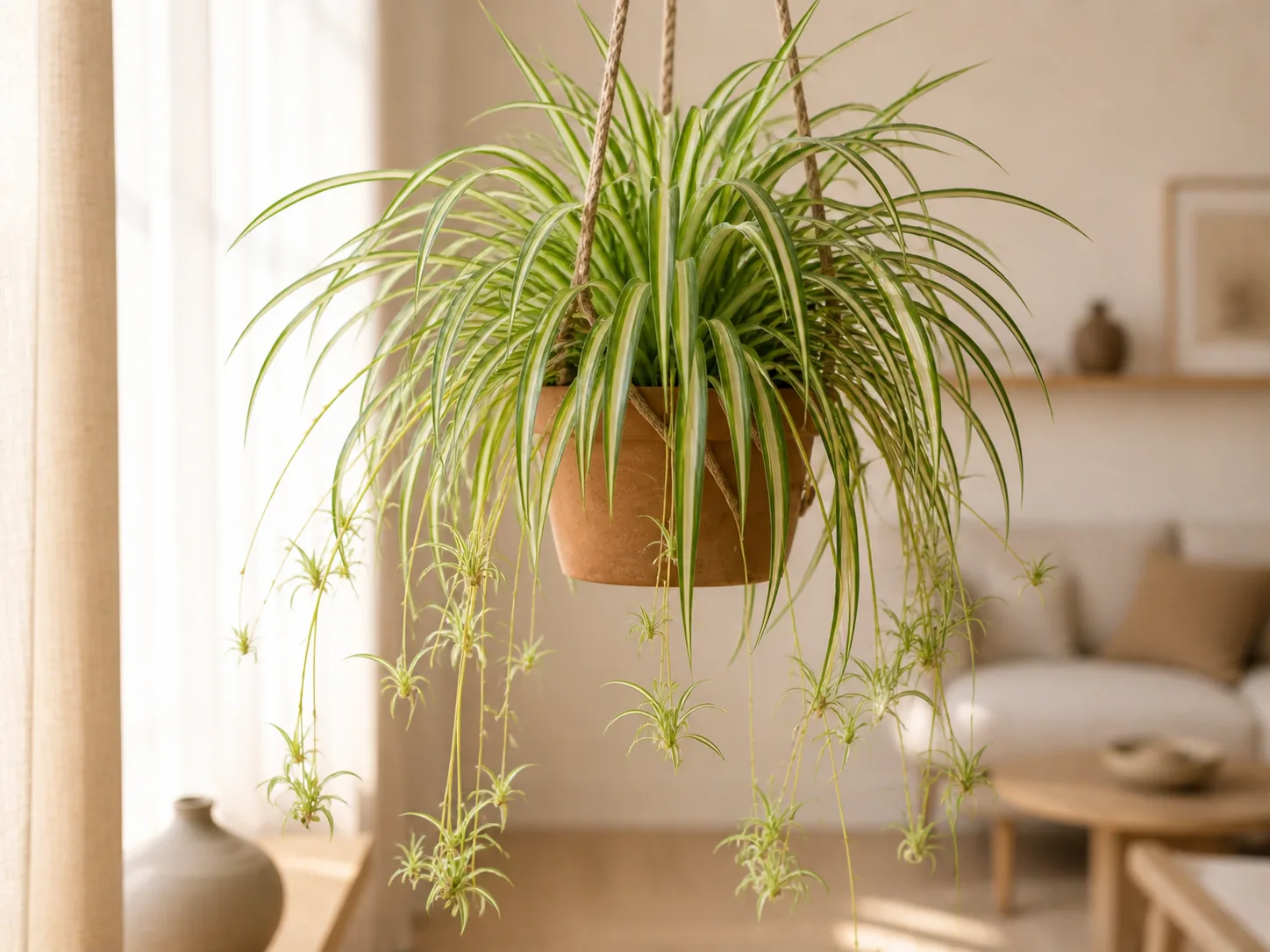
The Chlorophytum comosum — the spider plant — is probably the most forgiving indoor plant on the market. Indestructible, non-toxic to pets and children, it constantly produces babies on long stalks that can be detached to multiply or gift. Listed in the famous NASA air-purifying plants study among the most efficient.
What you really need to know
The Swiss Army knife of plant parents: tolerates low light, neglect, occasional overwatering. Grows fast. Perfect to start a collection or gift to a beginner.
Light
Very flexible: medium to bright indirect. Avoids prolonged direct sun (brown spots). In low light, the variegation of variegated cultivars (Vittatum, Bonnie) fades.
Watering
Every 7 to 10 days. Tolerates an occasional drought thanks to its tuberous roots that store water. Check with the finger. Brown leaf tips = water too hard or fluoridated, switch to filtered water.
Humidity and temperature
Indifferent to humidity (30-60 %). Tolerates 10-30 °C. Ideal between 13-27 °C.
Mistakes to avoid
- Tap water too hard/fluoridated: classic brown tips
- Pot too large: prefers being slightly root-bound
- Over-fertilising: brown tips too
Toxicity
✅ Non-toxic to cats, dogs and children. Ideal companion for pet households. Note: cats love chewing the leaves (mildly euphoric effect).
Propagation
The big advantage: flower stalks produce babies (mini plantlets) with their own little roots. Three techniques:
- Lay the baby on soil in a neighbouring pot (still attached to mother), cut the link after 2-3 weeks
- Cut the baby directly and put in water, transfer to soil when roots = 5 cm
- Divide the clump at repotting
Popular cultivars
- Variegatum: green leaves with white margins
- Vittatum: white centre, green edges (the most common)
- Bonnie: curly compact leaves
- Atlantic: yellow and green variegation
Frequently asked questions
How often should I water this plant?
Water Spider Plant every 7-10 days, adjusting for season, pot size and available light. Always check that the top of the substrate has started to dry before watering.
Is this plant toxic to cats and dogs?
Spider Plant is classified as "non toxic". As a precaution, keep it away from pets that chew leaves and contact a vet if ingestion causes symptoms.
Why are its leaves turning yellow?
Yellow leaves on Spider Plant most often come from overwatering, low light or recent stress. First check substrate moisture, root condition and placement.
Where should I place it at home?
Spider Plant prefers medium light. Place it near a bright window without harsh direct sun, then adjust if leaves fade, brown or growth slows.
Is it beginner-friendly?
Spider Plant is a good beginner plant if watering stays moderate and regular.
Sources and method
This fact sheet is based on public botanical references, recognized horticultural recommendations and the SPRAIA editorial method.
- Royal Botanic Gardens, Kew
- Missouri Botanical Garden
- Royal Horticultural Society
- GBIF
Diagnose and track this plant
SPRAIA is in private beta. Join the list to test plant identification, visual diagnosis and reminders tailored to each plant.
Join the private beta