Echeveria
Echeveria
Perfect rosettes in flower form, available in dozens of colours. Needs little water, plenty of light. Pet-safe.
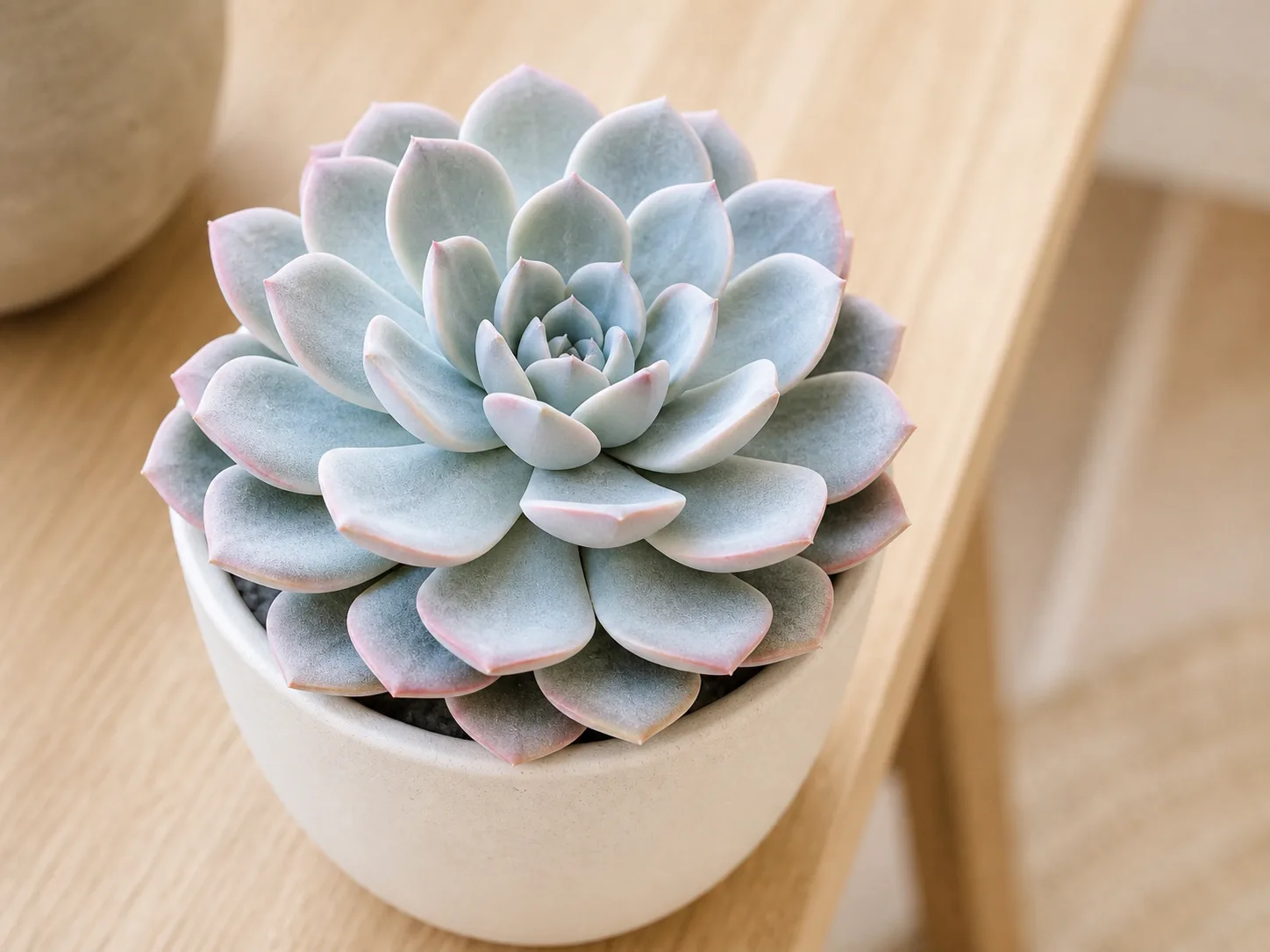
Echeverias have become iconic in interior decor: their perfectly geometric rosettes, available in dozens of colours (blue-grey, pink, purple, light green, near-black), bring a unique graphic touch. Native to Mexico, they’re succulents that ask little but demand maximum light.
What you really need to know
Succulent plant: free-draining substrate, infrequent watering, maximum direct light. The fatal mistake: too much water. The second fatal mistake: too little light → etiolation and colour loss.
Light
Bright direct light. South-facing window sill ideal. In low light, the rosette stretches (etiolation) and loses its signature colours. In summer, can move outdoors in full sun after gradual acclimatisation.
Watering
Every 14 to 21 days during growing season, every 4-6 weeks in winter. Completely dry substrate between waterings. Water without wetting the rosette (standing water = centre rot). Prefer bottom watering (place the pot in a saucer of water, remove after 10 min).
Substrate
Cactus/succulent specific: very free-draining. Terracotta pot with generous holes. Layer of pumice or gravel at the bottom and on top.
Humidity and temperature
Indifferent to humidity, loves dry air. Tolerates 5-30 °C. Ideal 13-27 °C.
Mistakes to avoid
- Overwatering: instant rosette rot
- Wetting the rosette: centre rot
- Insufficient light: dramatic etiolation within weeks
- Standard potting soil: holds too much water
Toxicity
✅ Non-toxic to cats, dogs and children. Ideal for pet households.
Propagation
Very easy. Three techniques:
- Detached leaf: laid on moist soil, roots + baby in 2-4 weeks
- Pups: detach the offsets around the mother
- Top cutting: cut the rosette, let it callus 3 days, plant
Popular cultivars
- Echeveria ‘Lola’: perfect pale pink
- Echeveria pulvinata: fuzzy silver
- Echeveria ‘Black Prince’: nearly black
- Echeveria ‘Perle von Nürnberg’: pink-purple
Frequently asked questions
How often should I water this plant?
Water Echeveria every 14-21 days, adjusting for season, pot size and available light. Always check that the top of the substrate has started to dry before watering.
Is this plant toxic to cats and dogs?
Echeveria is classified as "non toxic". As a precaution, keep it away from pets that chew leaves and contact a vet if ingestion causes symptoms.
Why are its leaves turning yellow?
Yellow leaves on Echeveria most often come from overwatering, low light or recent stress. First check substrate moisture, root condition and placement.
Where should I place it at home?
Echeveria prefers direct sun light. Place it near a bright window without harsh direct sun, then adjust if leaves fade, brown or growth slows.
Is it beginner-friendly?
Echeveria is a good beginner plant if watering stays moderate and regular.
Sources and method
This fact sheet is based on public botanical references, recognized horticultural recommendations and the SPRAIA editorial method.
- Royal Botanic Gardens, Kew
- Missouri Botanical Garden
- Royal Horticultural Society
- GBIF
Diagnose and track this plant
SPRAIA is in private beta. Join the list to test plant identification, visual diagnosis and reminders tailored to each plant.
Join the private beta