Rubber Plant (Ficus Elastica)
Ficus elastica
Glossy oversized leaves, architectural habit. Modern elegance, medium growth, tolerant once well established.
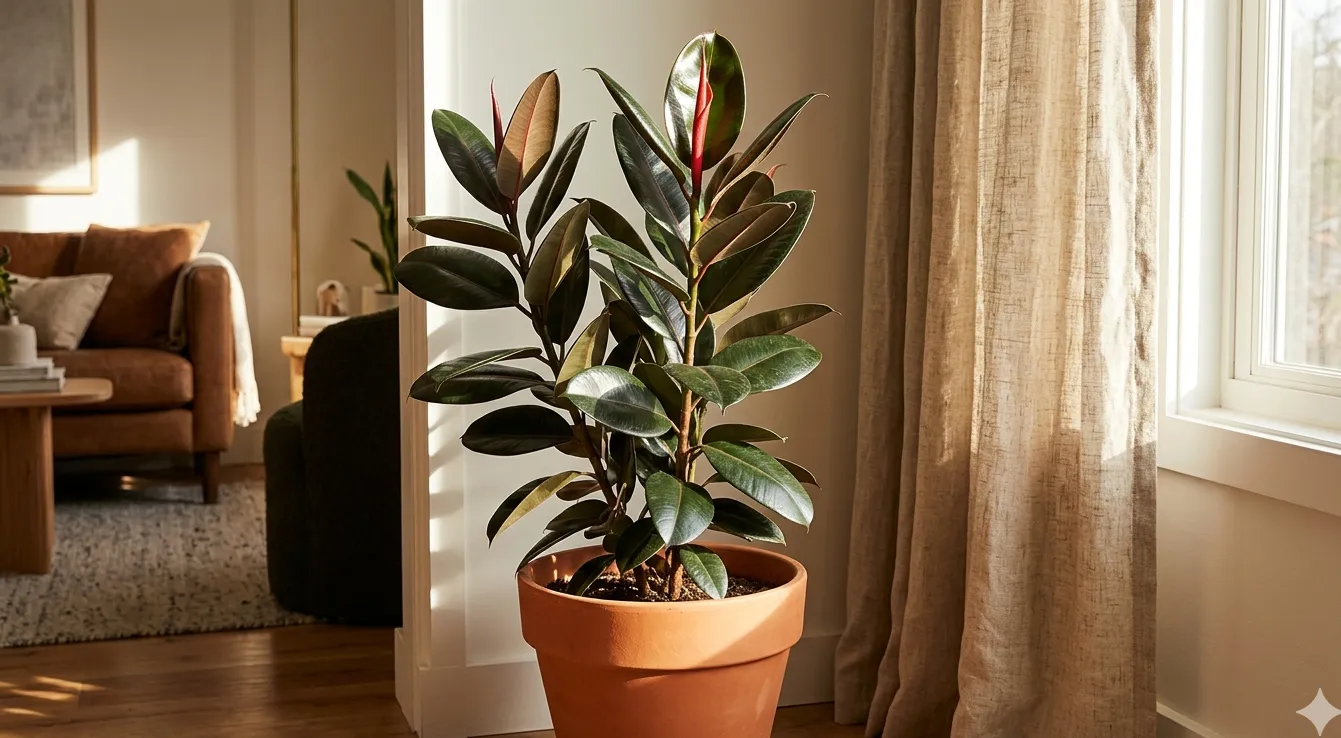
The Ficus elastica — commonly called rubber plant — instantly adds an architectural touch to any interior. Its large glossy oval leaves, upright habit and steady growth make it imposing yet easy to live with. Native to the humid forests of Asia, it thrives in bright French homes provided you avoid a few classic pitfalls.
What you really need to know
The Ficus elastica is easy once well settled, but hates moves and drafts. Choose its spot carefully and don’t disturb it: it’ll reward you with fast growth and dense foliage.
Light
Bright indirect light. Tolerates a few hours of soft direct sun (morning/late afternoon). In low light, lower leaves yellow and drop. Rotate the pot a quarter turn each week for balanced growth.
Watering
Every 7 to 10 days in summer, every 14 days in winter. Let the top 2-3 cm dry before watering. The Ficus elastica handles extremes poorly: neither too dry nor too wet. Consistency is key.
Humidity and temperature
Ideal between 40-70 % humidity, but tolerates dry indoor air. Temperature 16-26 °C, never below 13 °C — that triggers massive lower-leaf drop.
Mistakes to avoid
- Frequent moves: leaf drop, sometimes permanent
- Drafts: front door, open winter window
- Insufficient light: yellow lower leaves
- Radiator too close: dry air, brown edges
Toxicity
⚠️ Mildly toxic to cats, dogs and humans: the white sap is irritating on contact (skin, eyes) and toxic if ingested. Wear gloves when repotting.
Propagation
Stem cutting with a node in water, or air layering for oversized specimens. Our Ficus elastica complete guide covers every technique.
Popular cultivars
- Robusta: classic dark green
- Tineke: cream variegation, very popular
- Burgundy / Black Prince: nearly black, dramatic
- Ruby: pink and cream variegation, the collector’s gem
Frequently asked questions
How often should I water this plant?
Water Rubber Plant (Ficus Elastica) every 7-10 days, adjusting for season, pot size and available light. Always check that the top of the substrate has started to dry before watering.
Is this plant toxic to cats and dogs?
Rubber Plant (Ficus Elastica) is classified as "mildly toxic". As a precaution, keep it away from pets that chew leaves and contact a vet if ingestion causes symptoms.
Why are its leaves turning yellow?
Yellow leaves on Rubber Plant (Ficus Elastica) most often come from overwatering, low light or recent stress. First check substrate moisture, root condition and placement.
Where should I place it at home?
Rubber Plant (Ficus Elastica) prefers bright indirect light. Place it near a bright window without harsh direct sun, then adjust if leaves fade, brown or growth slows.
Is it beginner-friendly?
Rubber Plant (Ficus Elastica) is a good beginner plant if watering stays moderate and regular.
Sources and method
This fact sheet is based on public botanical references, recognized horticultural recommendations and the SPRAIA editorial method.
- Royal Botanic Gardens, Kew
- Missouri Botanical Garden
- Royal Horticultural Society
- GBIF
Diagnose and track this plant
SPRAIA is in private beta. Join the list to test plant identification, visual diagnosis and reminders tailored to each plant.
Join the private beta