Anthurium
Anthurium andraeanum
Flamingo flower: bright red spathes, near-continuous bloom. Tropical, demands high humidity. For intermediate plant parents.
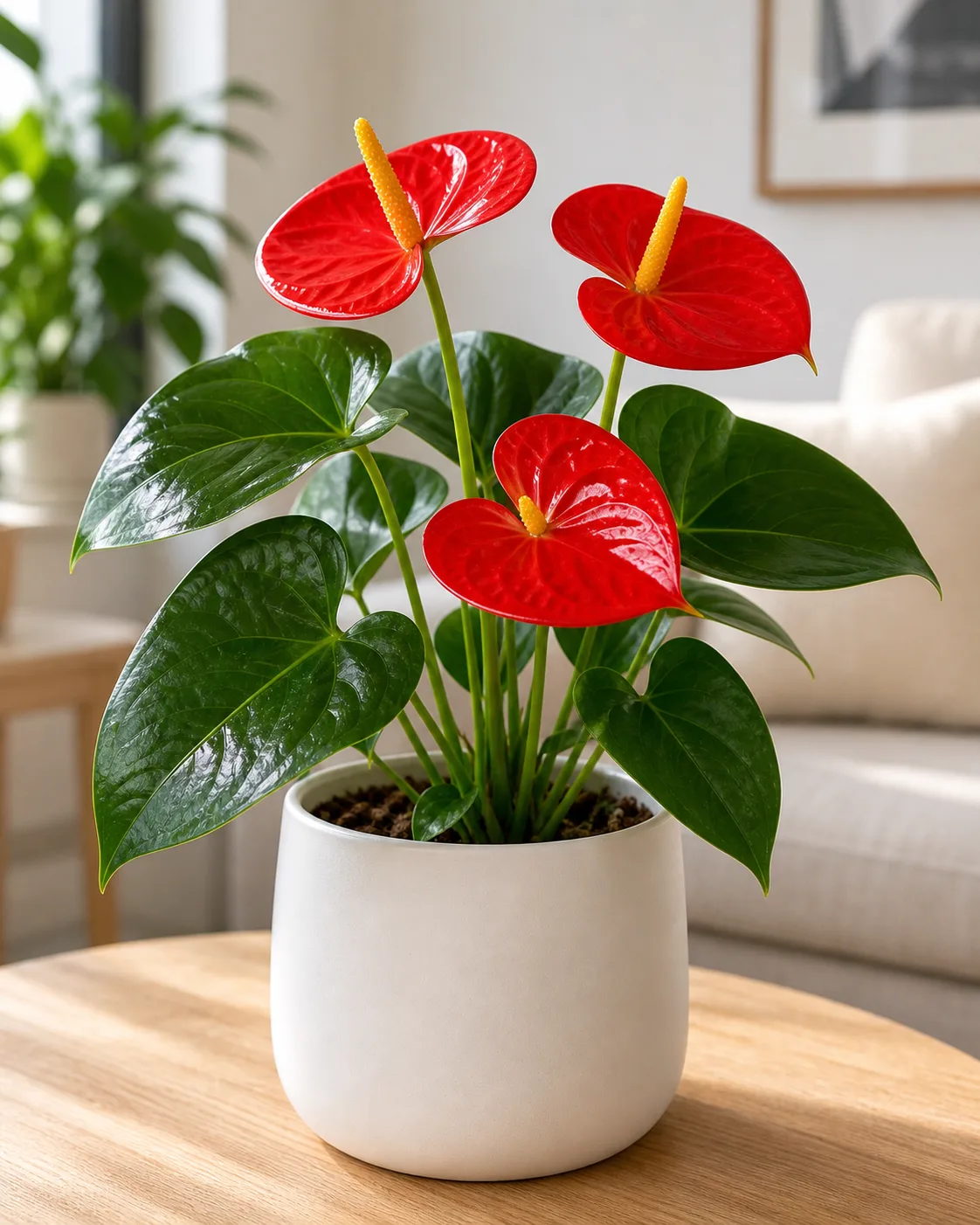
The Anthurium andraeanum — the flamingo flower — is famous for its colourful spathes (mostly red but also pink, white, orange) that look like waxy flowers. The actual flower is the central spadix. This tropical plant blooms almost continuously when conditions are right — hence its popularity in bouquets and homes.
What you really need to know
Intermediate-level plant: requires high humidity + bright indirect light + regular but not excessive watering. Well cared for, it produces colourful spathes year-round. Poorly cared for, it barely moves.
Light
Bright indirect light. No direct sun (burns leaves and fades spathes). In low light, no flowering. Optimum: 1-2 m from an east- or west-facing window.
Watering
Every 5 to 7 days. The substrate must remain slightly moist without ever being soaked. Filtered or rain water preferred (sensitive to limescale).
Humidity and temperature
Critical: 60-80 % humidity. Below 50 %, leaf edges brown and flowering stops. Use a humidifier or group with other tropicals. Temperature 18-25 °C, never below 16 °C.
Encouraging flowering
- Stable bright indirect light (no dark corner)
- High-phosphorus fertiliser (NPK 5-10-10) every 15 days April-September
- Constant high humidity
- Cooler winter rest (18 °C, reduced water) to retrigger spring flowering
Mistakes to avoid
- Dry air: brown leaves, no flowers
- Hard tap water: brown spots
- Substrate too compact: prefers an aerated mix (orchid + perlite)
- Insufficient light: no flowering
Toxicity
⚠️ Toxic to cats, dogs and humans: irritating sap (calcium oxalate). Symptoms if ingested: oral pain, vomiting.
Propagation
By clump division at repotting: separate the lateral pups with their roots. Possible by seed but slow and tricky.
Popular cultivars
- Andraeanum classic: red spathes
- Pink Champion: pink
- White Heart: white
- Black Beauty: nearly black (sought-after)
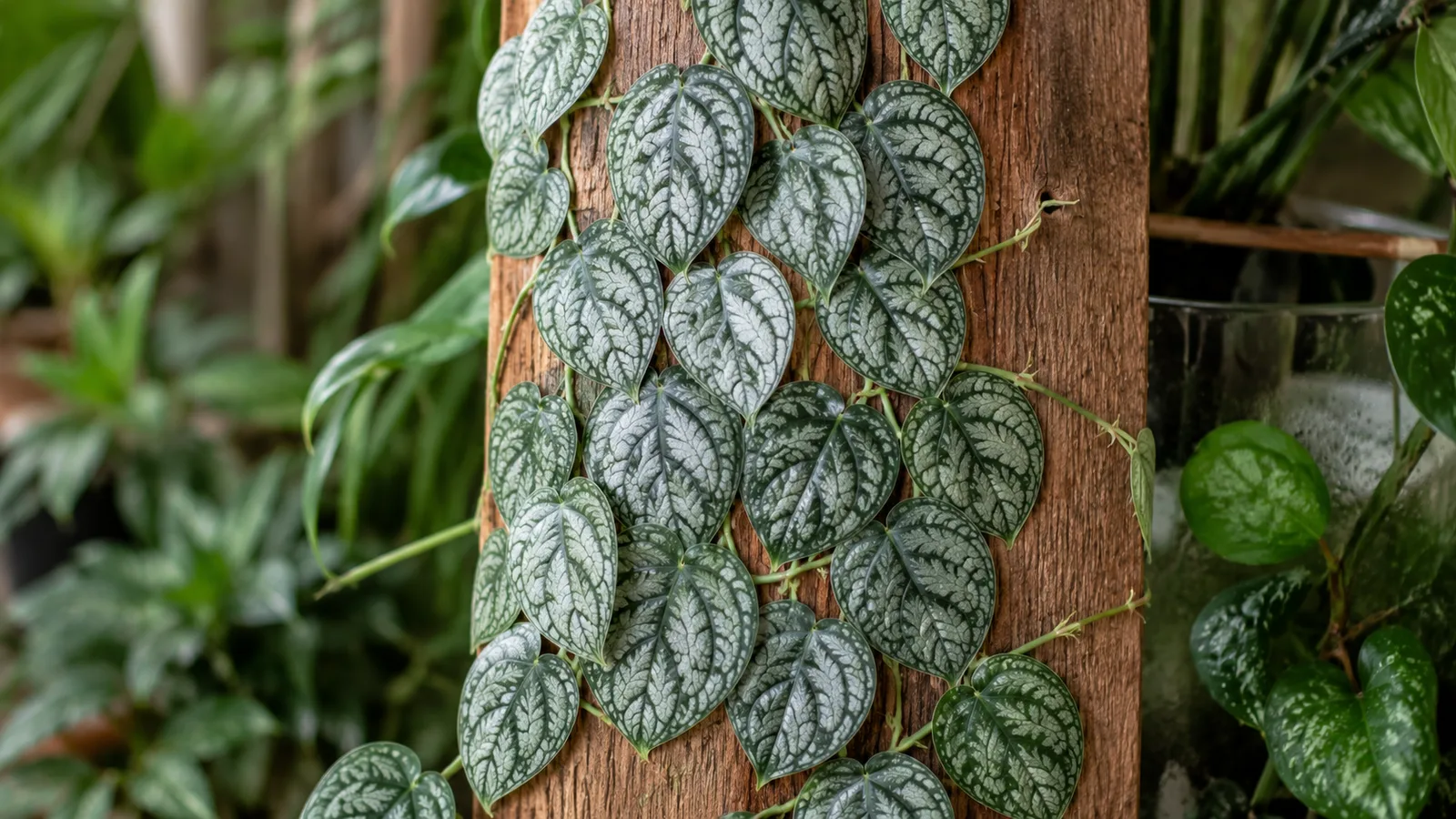
- Anthurium clarinervium: velvety silver-veined leaves (collector’s piece)
Frequently asked questions
How often should I water this plant?
Water Anthurium every 5-7 days, adjusting for season, pot size and available light. Always check that the top of the substrate has started to dry before watering.
Is this plant toxic to cats and dogs?
Anthurium is classified as "toxic". As a precaution, keep it away from pets that chew leaves and contact a vet if ingestion causes symptoms.
Why are its leaves turning yellow?
Yellow leaves on Anthurium most often come from overwatering, low light or recent stress. First check substrate moisture, root condition and placement.
Where should I place it at home?
Anthurium prefers bright indirect light. Place it near a bright window without harsh direct sun, then adjust if leaves fade, brown or growth slows.
Is it beginner-friendly?
Anthurium needs some observation: it is manageable, but less forgiving of overwatering and poor placement.
Sources and method
This fact sheet is based on public botanical references, recognized horticultural recommendations and the SPRAIA editorial method.
- Royal Botanic Gardens, Kew
- Missouri Botanical Garden
- Royal Horticultural Society
- GBIF
Diagnose and track this plant
SPRAIA is in private beta. Join the list to test plant identification, visual diagnosis and reminders tailored to each plant.
Join the private beta