Polka Dot Begonia
Begonia maculata
The polka dot begonia: asymmetric leaves with silver spots, red underside. White blooms, vertical growth, very trendy.
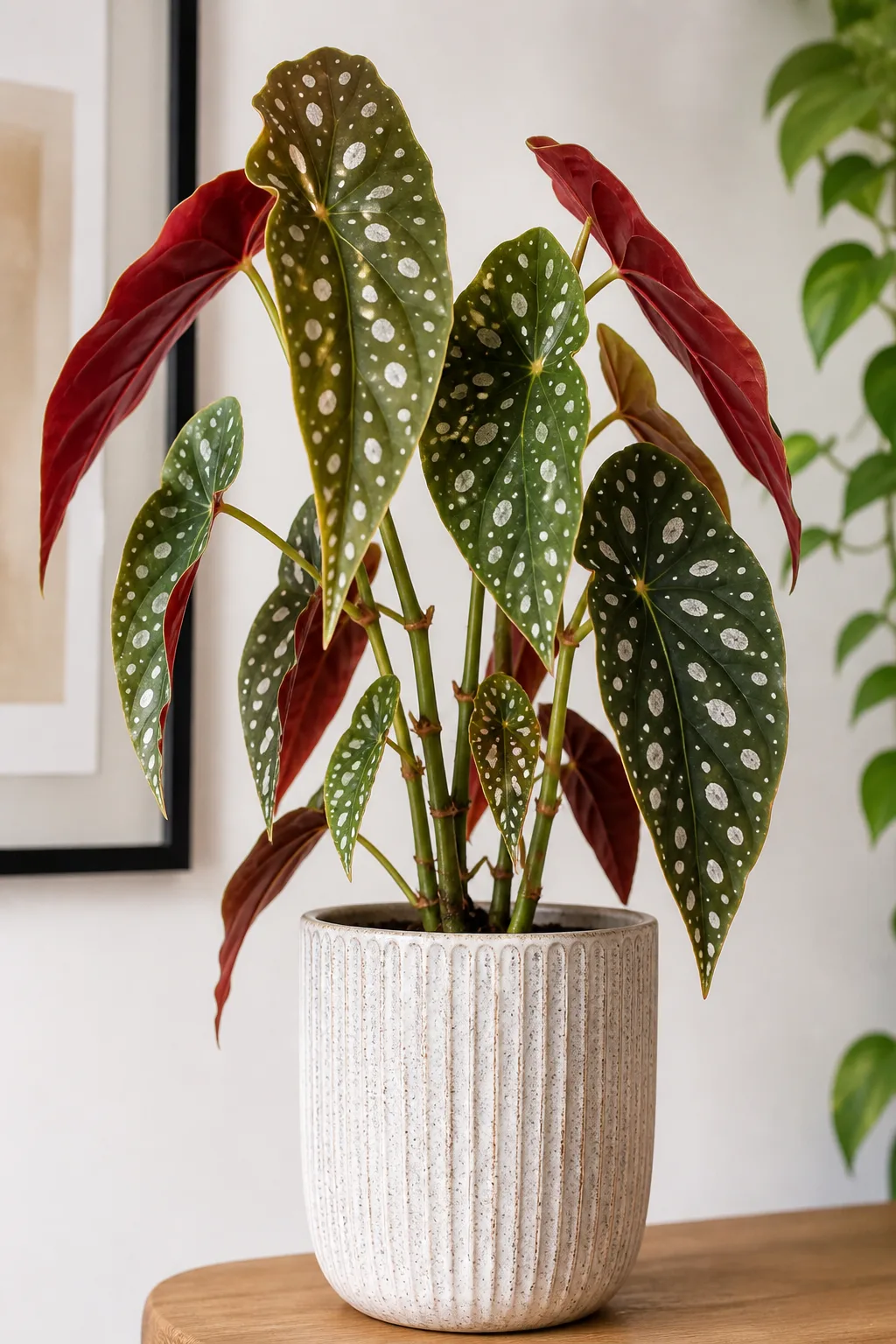
The Begonia maculata — nicknamed polka dot for its signature silver spots — has been one of the trendiest plants in recent years. Its asymmetric angel-wing leaves, dark green spotted with silver above and burgundy red below, create a spectacular contrast. Bonus: it naturally flowers indoors (white clusters).
What you really need to know
Moderately difficult plant: you need to find the right humidity/water balance. Too much water = soft stems, too little = lower-leaf drop. Fast growth in good conditions, needs staking once it reaches 60 cm.
Light
Bright indirect light. No direct sun (burns the fragile leaves). In low light, petioles stretch and the plant gets leggy. Optimum: 1 m from an east- or west-facing window.
Watering
Every 5 to 7 days. Substrate slightly moist at all times without being soaked. Check with a finger 2 cm in — slightly moist = perfect, dry = water.
Humidity and temperature
Ideal 50-70 % humidity. Tolerates dry air better than the Calathea or Maranta, but prefers a humidifier in winter. Temperature 18-24 °C.
Pruning to bushen up
The Begonia maculata grows upward quickly. To keep a balanced plant, pinch tips regularly. Cuttings root easily in water.
Mistakes to avoid
- Wetting leaves: white spots, possible powdery mildew
- Overwatering: soft stems, base rot
- Direct sun: scorched leaves
- Pot too large: prefers being root-bound
Toxicity
⚠️ Mildly toxic to cats and dogs. Symptoms: drooling, vomiting if ingested.
Propagation
Very easy in water: cut a stem with a node, submerge for 2-3 weeks, roots appear quickly. Plant when roots reach 5 cm. Our water propagation guide covers the details.
Flowering
Clusters of small waxy white flowers, often in summer. Cut spent flowers to stimulate new blooms.
Frequently asked questions
How often should I water this plant?
Water Polka Dot Begonia every 5-7 days, adjusting for season, pot size and available light. Always check that the top of the substrate has started to dry before watering.
Is this plant toxic to cats and dogs?
Polka Dot Begonia is classified as "mildly toxic". As a precaution, keep it away from pets that chew leaves and contact a vet if ingestion causes symptoms.
Why are its leaves turning yellow?
Yellow leaves on Polka Dot Begonia most often come from overwatering, low light or recent stress. First check substrate moisture, root condition and placement.
Where should I place it at home?
Polka Dot Begonia prefers bright indirect light. Place it near a bright window without harsh direct sun, then adjust if leaves fade, brown or growth slows.
Is it beginner-friendly?
Polka Dot Begonia needs some observation: it is manageable, but less forgiving of overwatering and poor placement.
Sources and method
This fact sheet is based on public botanical references, recognized horticultural recommendations and the SPRAIA editorial method.
- Royal Botanic Gardens, Kew
- Missouri Botanical Garden
- Royal Horticultural Society
- GBIF
Diagnose and track this plant
SPRAIA is in private beta. Join the list to test plant identification, visual diagnosis and reminders tailored to each plant.
Join the private beta