Pothos
Epipremnum aureum
The unkillable vine: tolerates low light, neglect and the occasional overwatering. Beginner-perfect, fast grower, easy to propagate.
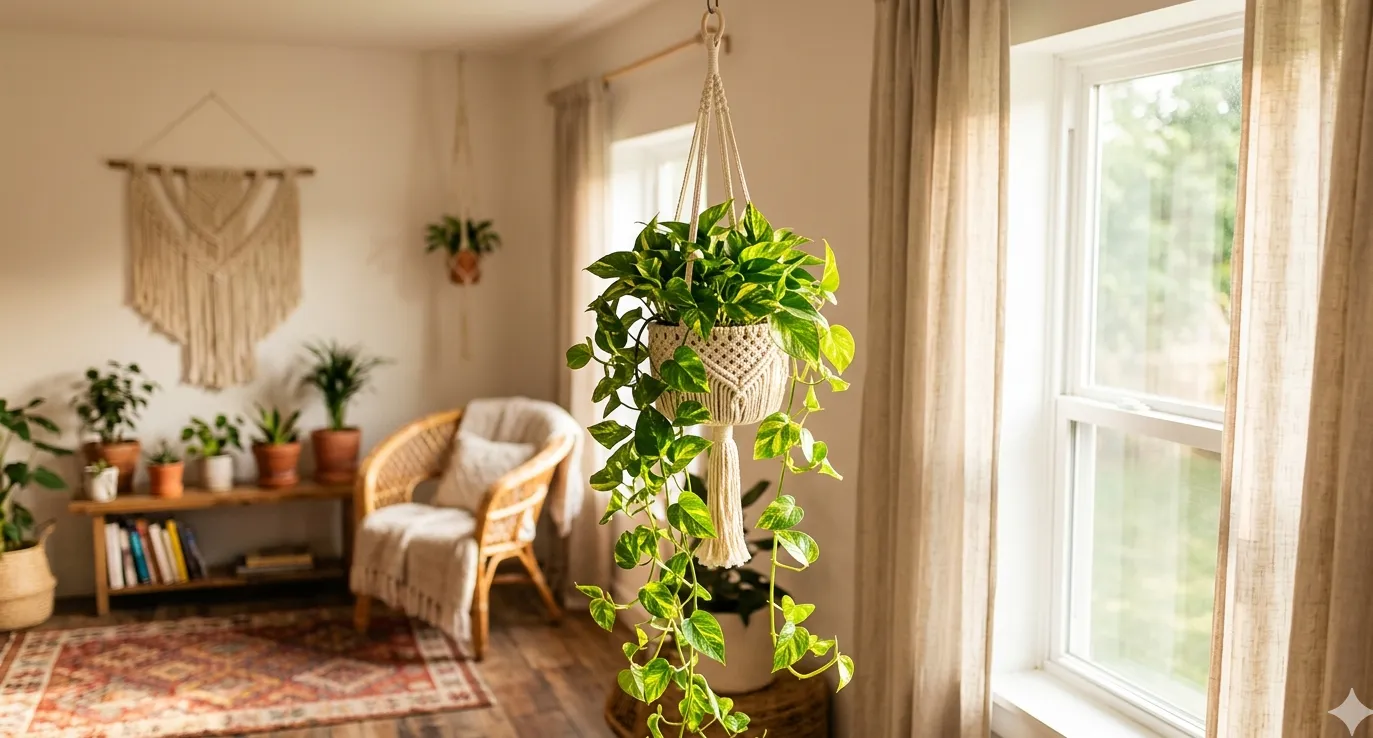
The Pothos is probably the most forgiving indoor plant on the market. If you only buy one plant to get started, make it this one: it handles low light, neglect, the occasional overwatering, and grows fast. Its trailing or climbing vines drape shelves and bookcases within months.
What you really need to know
Practically indestructible. The Pothos tolerates everything except chronic overwatering and prolonged direct sun. Pinch tips regularly to bushen up, and root every cutting to multiply your collection for free.
Light
Very flexible: tolerates low light, thrives in bright indirect. Avoid direct sun (brown spots). In low light, the variegation of variegated cultivars (Marble Queen, N’Joy) fades; in bright light, it pops.
Watering
Water when the surface of the substrate is dry. Roughly every 7-10 days in summer, every 14 days in winter. The Pothos communicates clearly when thirsty: leaves go slightly limp. One watering and 24 hours later, it’s resurrected.
Humidity and temperature
Tolerates dry indoor air (40 % is fine). Withstands 12 to 30 °C. Ideal between 17-27 °C.
Mistakes to avoid
- Overwatering: the only true killer, root rot within 1-2 weeks
- Prolonged direct sun: scorched leaves
- Cold tap water in winter: thermal shock
Toxicity
⚠️ Mildly toxic to cats and dogs (calcium oxalate). Keep out of reach of pets that chew leaves.
Propagation
Water propagation couldn’t be simpler: cut below a node, drop into a glass of water, roots in 5-10 days. Our water propagation guide covers every step.
Popular cultivars
- Golden Pothos: classic, green with yellow splashes
- Marble Queen: heavy white-cream marbling, slower growth
- Neon: bright chartreuse, almost fluorescent
- N’Joy: smaller leaves, structured white variegation
- Manjula: wavy leaves, dramatic variegation
Frequently asked questions
How often should I water this plant?
Water Pothos every 7-10 days, adjusting for season, pot size and available light. Always check that the top of the substrate has started to dry before watering.
Is this plant toxic to cats and dogs?
Pothos is classified as "mildly toxic". As a precaution, keep it away from pets that chew leaves and contact a vet if ingestion causes symptoms.
Why are its leaves turning yellow?
Yellow leaves on Pothos most often come from overwatering, low light or recent stress. First check substrate moisture, root condition and placement.
Where should I place it at home?
Pothos prefers medium light. Place it near a bright window without harsh direct sun, then adjust if leaves fade, brown or growth slows.
Is it beginner-friendly?
Pothos is a good beginner plant if watering stays moderate and regular.
Sources and method
This fact sheet is based on public botanical references, recognized horticultural recommendations and the SPRAIA editorial method.
- Royal Botanic Gardens, Kew
- Missouri Botanical Garden
- Royal Horticultural Society
- GBIF
Diagnose and track this plant
SPRAIA is in private beta. Join the list to test plant identification, visual diagnosis and reminders tailored to each plant.
Join the private beta