Calathea Orbifolia
Goeppertia orbifolia
A tropical diva with large round silvery leaves. Demanding on humidity and filtered water but stunning. Pet-safe.
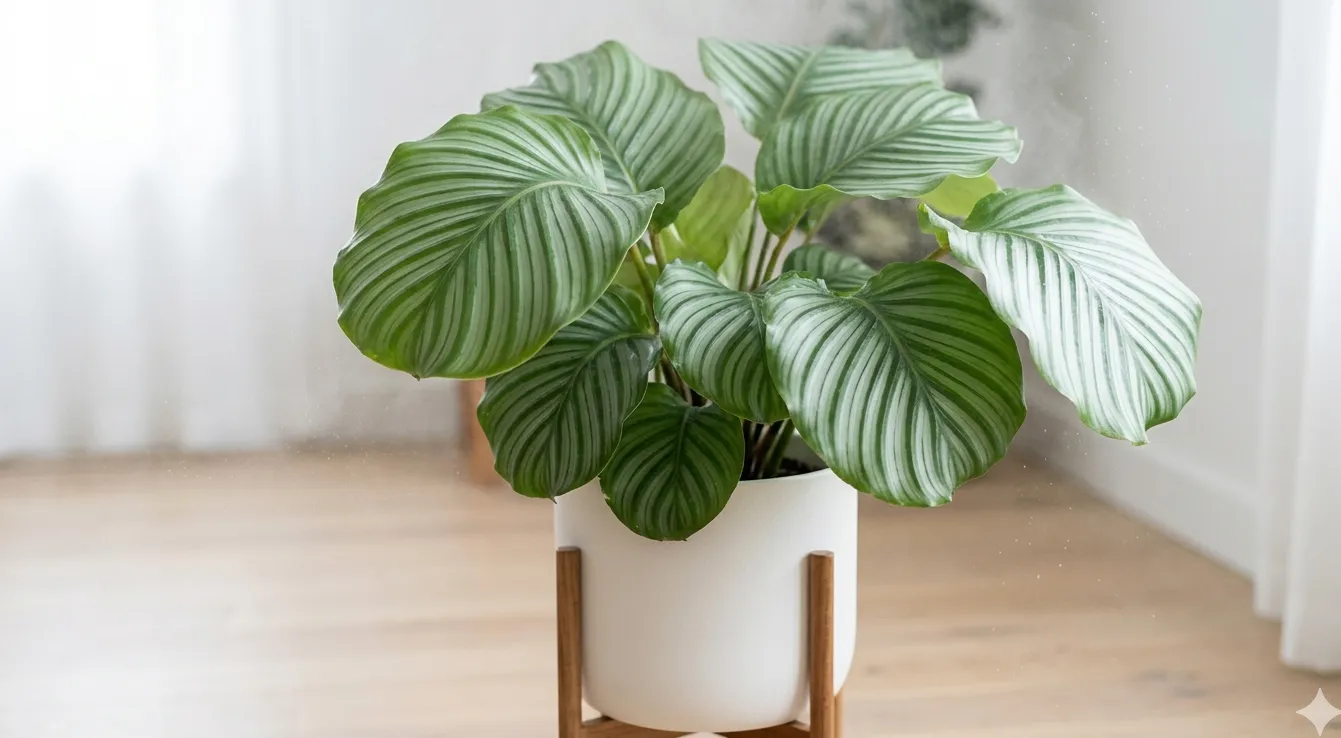
The Calathea Orbifolia is one of the most spectacular tropical houseplants. Its round leaves, pale green striped with silver, can reach 30 cm across. It’s also a “prayer plant”: the leaves fold vertically at night (a phenomenon called nyctinasty).
But beware: it’s a demanding diva. Tap water that’s too hard, dry air, drafts, direct light — every one of these triggers irreversible browning of the edges. Reserved for plant parents with some experience.
What you really need to know
Requires high humidity, filtered or rain water, and a thermally stable spot. Not a beginner plant, but with the right care it becomes a stunning companion. Beginners should rather check our easy plants list.
Light
Medium to bright indirect. No direct sun (it bleaches the leaves and burns the edges). Ideal behind a sheer curtain in an east- or north-facing room. In low light, variegation fades.
Watering
Every 5 to 7 days during growing season, spaced out in winter. The substrate must stay slightly moist at all times without ever being soaked. Use filtered, distilled or rain water exclusively: chlorine and limescale brown the leaves within weeks.
Humidity and temperature
Critical. Aim for 60-80 % humidity: a humidifier is almost mandatory in winter. Temperature 18-24 °C, never below 15 °C.
Mistakes to avoid
- Tap water: brown edges guaranteed within 2 months
- Dry air + nearby radiator: leaves curl and dry
- Drafts: sudden leaf drop
- Direct sun: permanent variegation bleaching
Toxicity
✅ Non-toxic to cats, dogs and children. Ideal for pet households.
Propagation
By division at repotting (spring), separating rhizomes with roots on each section. Water cuttings don’t work for Calatheas.
Popular cultivars
- Orbifolia: large round silvery leaves (the most sought-after)
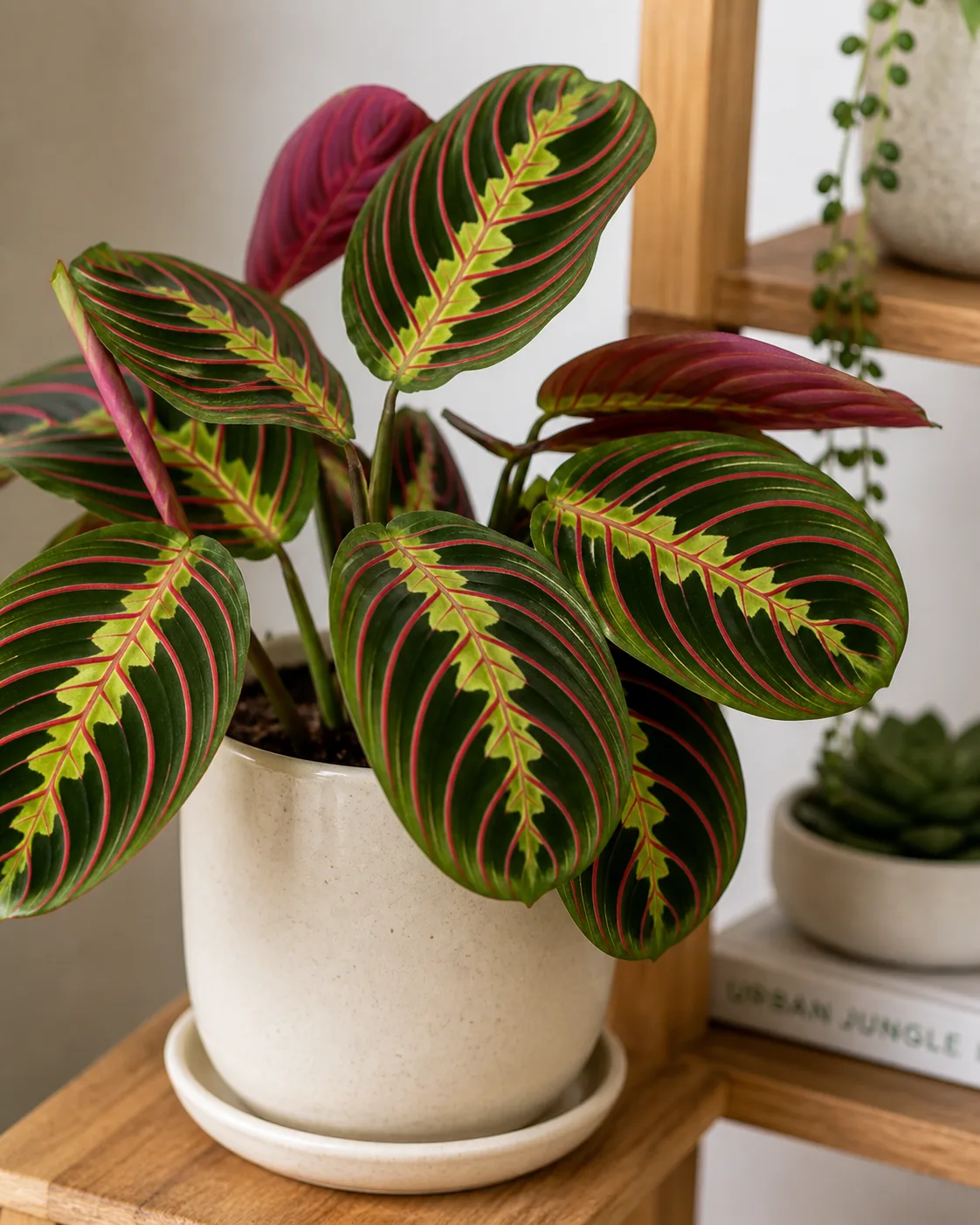
- Calathea ornata “Pinstripe”: pink stripes
- Calathea lancifolia “Rattlesnake”: elongated speckled leaves
- Calathea makoyana: the “peacock plant”, deep green motifs
Frequently asked questions
How often should I water this plant?
Water Calathea Orbifolia every 5-7 days, adjusting for season, pot size and available light. Always check that the top of the substrate has started to dry before watering.
Is this plant toxic to cats and dogs?
Calathea Orbifolia is classified as "non toxic". As a precaution, keep it away from pets that chew leaves and contact a vet if ingestion causes symptoms.
Why are its leaves turning yellow?
Yellow leaves on Calathea Orbifolia most often come from overwatering, low light or recent stress. First check substrate moisture, root condition and placement.
Where should I place it at home?
Calathea Orbifolia prefers medium light. Place it near a bright window without harsh direct sun, then adjust if leaves fade, brown or growth slows.
Is it beginner-friendly?
Calathea Orbifolia needs some observation: it is manageable, but less forgiving of overwatering and poor placement.
Sources and method
This fact sheet is based on public botanical references, recognized horticultural recommendations and the SPRAIA editorial method.
- Royal Botanic Gardens, Kew
- Missouri Botanical Garden
- Royal Horticultural Society
- GBIF
Diagnose and track this plant
SPRAIA is in private beta. Join the list to test plant identification, visual diagnosis and reminders tailored to each plant.
Join the private beta