Pilea Peperomioides (Chinese Money Plant)
Pilea peperomioides
Perfect round leaves, endless propagation by offsets. Compact, non-toxic, ideal indoors.
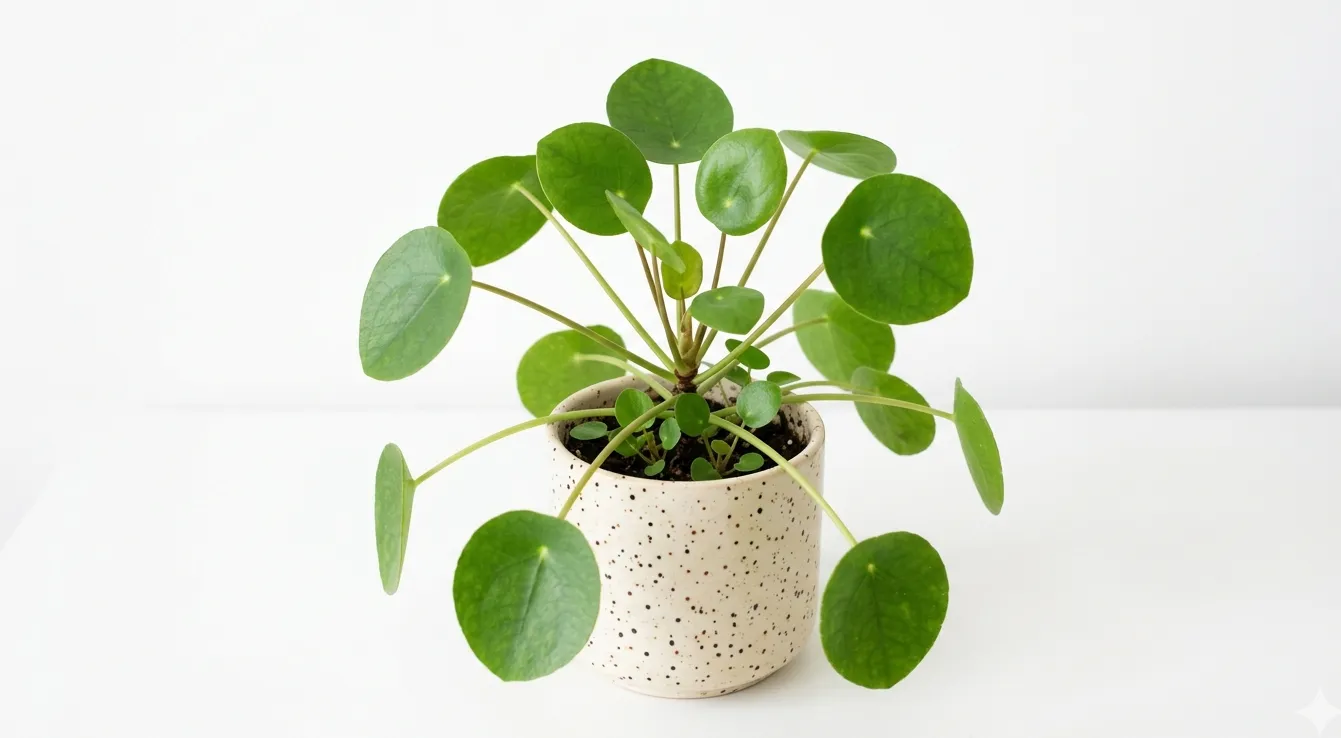
The Pilea peperomioides — nicknamed “Chinese money plant” for its perfect round leaves — has gone viral on Instagram in recent years. Native to the mountains of Yunnan, it’s a relatively recent species in European homes (popularised by a Norwegian missionary in the 1940s). Its superpower: it constantly produces offsets (“pups”) that can be detached and planted to multiply your collection or gift.
What you really need to know
Easy plant, compact, non-toxic. Rotate the pot regularly (a quarter turn weekly) because the Pilea strongly orients toward light and ends up unattractively leaning without this habit.
Light
Bright indirect light. Loves an east- or west-facing window, 50 cm to 1 m away. Avoid direct south sun which yellows the leaves. In low light, petioles stretch and the plant gets leggy.
Watering
Every 7 to 10 days. Let the top 2 cm dry between waterings. The Pilea communicates clearly when thirsty: leaves go slightly limp and droopy. One generous watering and 2 hours later it’s revived.
Humidity and temperature
Tolerates standard apartment conditions (40-60 % humidity, 13-24 °C). Not demanding — one of the reasons for its popularity.
Mistakes to avoid
- Cache pot without drainage: rapid rot
- No rotation: unbalanced growth, leaning plant
- Cold water: prefer room-temperature water
Toxicity
✅ Non-toxic to cats, dogs and children. Ideal for pet households.
Propagation
This is the Pilea’s superpower: it constantly produces pups around the base. Detach with a bit of root when they reach 5-7 cm, plant in soil or root in water. Our Pilea complete guide covers every technique.
Decor tip
The Pilea looks great in clusters of small pots: a mother pot + 4-5 babies in matching pots on a shelf.
Frequently asked questions
How often should I water this plant?
Water Pilea Peperomioides (Chinese Money Plant) every 7-10 days, adjusting for season, pot size and available light. Always check that the top of the substrate has started to dry before watering.
Is this plant toxic to cats and dogs?
Pilea Peperomioides (Chinese Money Plant) is classified as "non toxic". As a precaution, keep it away from pets that chew leaves and contact a vet if ingestion causes symptoms.
Why are its leaves turning yellow?
Yellow leaves on Pilea Peperomioides (Chinese Money Plant) most often come from overwatering, low light or recent stress. First check substrate moisture, root condition and placement.
Where should I place it at home?
Pilea Peperomioides (Chinese Money Plant) prefers bright indirect light. Place it near a bright window without harsh direct sun, then adjust if leaves fade, brown or growth slows.
Is it beginner-friendly?
Pilea Peperomioides (Chinese Money Plant) is a good beginner plant if watering stays moderate and regular.
Sources and method
This fact sheet is based on public botanical references, recognized horticultural recommendations and the SPRAIA editorial method.
- Royal Botanic Gardens, Kew
- Missouri Botanical Garden
- Royal Horticultural Society
- GBIF
Diagnose and track this plant
SPRAIA is in private beta. Join the list to test plant identification, visual diagnosis and reminders tailored to each plant.
Join the private beta