Mineral Substrate and PON: The Complete Guide
Everything about mineral substrate and Lechuza PON. Composition, benefits, transition from soil and compatible plants.
By SPRAIA editorial team · Method: botanical sources, field feedback and editorial validation
Mineral substrate is gaining ground among indoor plant enthusiasts. Forget classic potting soil that compacts, moulds and attracts gnats: enter zeolite beads, pumice and volcanic lava. Among the options, Lechuza PON has become the reference. But is it really better? Let’s break it down.
What is a mineral substrate?
A mineral substrate is a mix of inorganic materials used as a growing medium for plants, partially or fully replacing traditional potting soil. Unlike organic soil that decomposes over time, mineral components are stable, inert and last for years.
The idea is simple: provide physical support for roots while ensuring optimal drainage and aeration. Nutrients are supplied exclusively via fertiliser diluted in irrigation water.
Classic mineral substrate components
Zeolite
Microporous volcanic rock that absorbs and releases water progressively. It acts as a buffering reservoir, stores nutrients and stabilises pH. The most versatile component.
Pumice
Ultra-light and porous, pumice offers excellent root aeration. It absorbs about 50 % of its weight in water and releases it slowly. Highly valued for bonsai and succulents.
Volcanic lava (pouzzolane)
Irregular porous rock creating air pockets in the substrate. Less absorbent than zeolite but excellent for drainage. Often used as a bottom layer.
Perlite
Volcanic glass expanded at very high temperature. Extremely light, it improves drainage and aeration. Breaks down over time unlike other mineral components.
Clay pebbles (LECA)
High-temperature-fired beads, popular in semi-hydroponics. Good aeration but limited absorption capacity. Often used in passive hydroponic culture.
Lechuza PON: the mineral substrate star
What is PON?
Lechuza PON is a patented mineral substrate made by the German brand Lechuza. It’s composed of:
- Zeolite — water and nutrient retention
- Pumice — aeration and drainage
- Volcanic lava — structure and porosity
- Slow-release fertiliser — feeds for about 6 months
This mix is designed to work with Lechuza reservoir pots (capillary self-watering system) but also works in classic pots.
Why is PON so popular?
- Ready to use — no need to mix yourself
- Sterile — no gnats, no mould, no pests in the substrate
- Perfect drainage — virtually impossible to overwater (the #1 cause of plant death, as covered in our watering guide)
- Reusable — just rinse and sterilise to reuse
- Clean — no soil mess, ideal for indoor spaces
Mineral substrate vs potting soil: comparison
| Criterion | Classic potting soil | Mineral substrate / PON |
|---|---|---|
| Drainage | Medium to low | Excellent |
| Root aeration | Compacts | Always aerated |
| Fungus gnats | Common | Almost non-existent |
| Mould | Possible | Very rare |
| Lifespan | 1-2 years | 5+ years (reusable) |
| Water retention | High | Moderate and steady |
| Nutrients | Included but exhausted | Must be supplied via fertiliser |
| Initial cost | € | €€€ |
| Long-term cost | €€ (replacement) | €€ (reusable) |
Which plants?
Excellent candidates
Plants that appreciate good drainage and hate wet feet thrive in mineral substrate:
- Alocasias and Philodendrons — love root aeration
- Monsteras — ideal drainage to prevent rot
- Orchids — many collectors switch to semi-mineral
- Succulents and cacti — perfect drainage
- Hoyas — epiphytic roots that hate compacted soil
Less suitable
Some plants prefer richer, constantly moist soil:
- Ferns — constant humidity needs
- Calatheas — prefer organic moist soil
- Bog plants — unsuited to pure mineral
How to switch to mineral substrate?
The transition from soil to mineral demands method. Here are the steps:
1. Pick the right time
Repot ideally in spring (March-May), when the plant is in active growth. Avoid winter or stress periods.
2. Prep the plant
- Gently unpot the plant
- Remove all soil from roots — crucial. Use lukewarm water to rinse
- Cut dead or rotten roots with sterilised pruners
- Let roots air-dry for 30 minutes
3. Repot in mineral
- Place a layer of substrate at the bottom of the pot (with drainage holes)
- Position the plant and fill around the roots
- Lightly settle by tapping the pot on the table
- Water generously to let the substrate settle
4. The adjustment period
Roots used to soil must re-adapt to the mineral medium. During the first 2-4 weeks:
- The plant may seem stagnant or drop a few leaves — that’s normal
- Water regularly: mineral retains less water than soil
- Don’t fertilise immediately if your substrate contains long-lasting fertiliser (like PON)
Watering in mineral substrate
This is the most important point to master. In mineral, the rules change:
- Water more often but in smaller amounts
- With a reservoir pot (Lechuza): fill the reservoir and let capillarity do its work
- Without reservoir: water when the substrate is dry on the top 2 cm
- Always fertilise with watering water (unless long-lasting fertiliser is present)
- Use a hydroponic fertiliser diluted at 50 % of the recommended dose
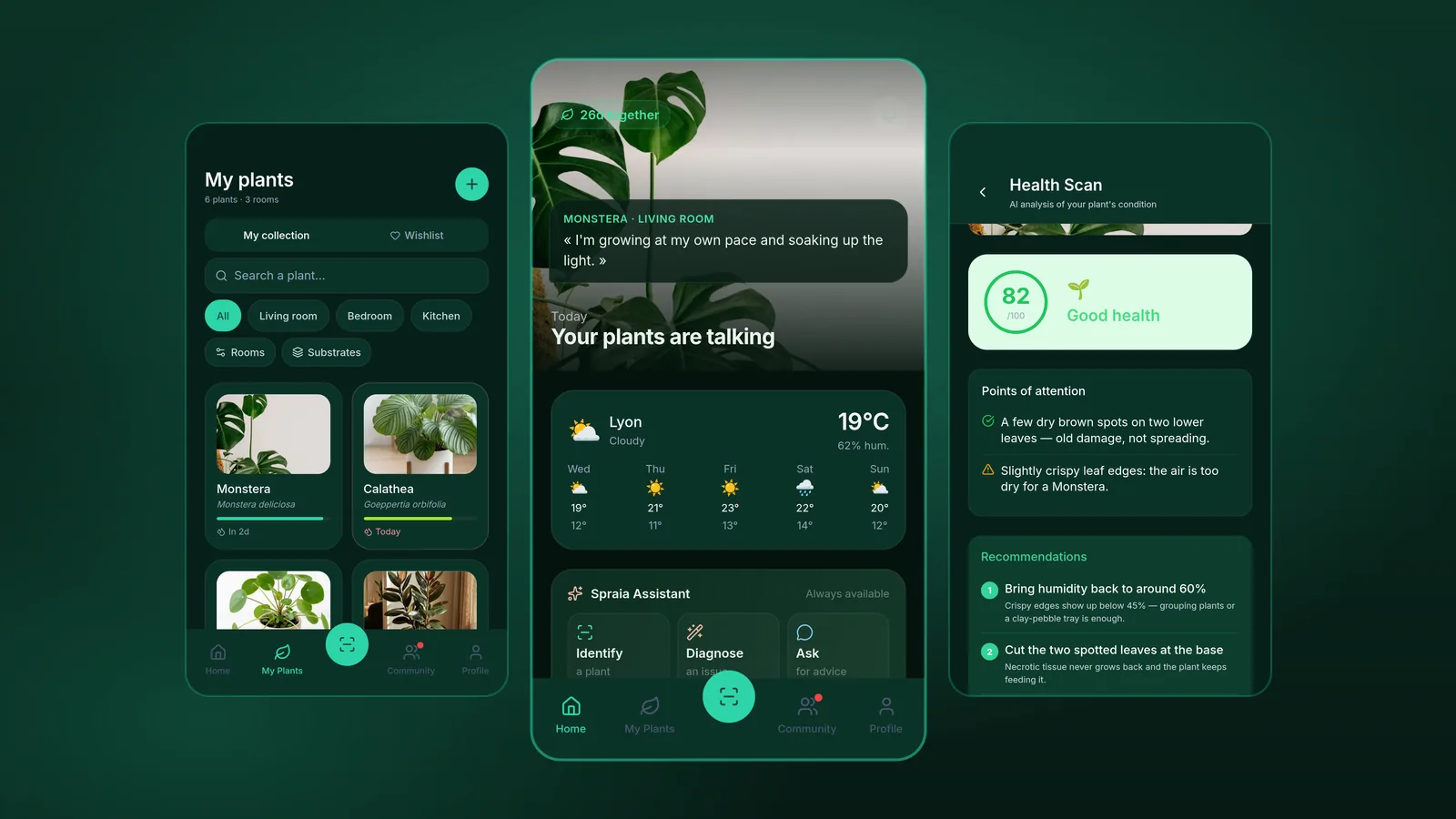
SPRAIA tip: our app adapts watering reminders based on your substrate type. Indicate “mineral substrate” in your plant’s profile and frequencies will adjust automatically.
Make your own mineral mix
You don’t have to buy PON. Here’s a balanced homemade recipe:
The universal mix:
- 40 % zeolite (4-8 mm grain size)
- 30 % pumice (4-8 mm)
- 30 % volcanic lava (4-8 mm)
For water-thirsty plants (Alocasias, Monsteras):
- 50 % zeolite
- 25 % pumice
- 25 % volcanic lava
For succulents and cacti:
- 20 % zeolite
- 40 % pumice
- 40 % volcanic lava
Rinse each component generously before use to remove dust.
Frequently asked questions about mineral substrate and PON
Essential questions before switching your plants from soil to mineral substrate.
- Nearly all common houseplants: Monstera, Philodendron, Pothos, Anthurium, Sansevieria, Ficus, Pilea, Calathea (with humidity caveats), Hoya, succulents. Acid-loving plants (Azalea, Camellia, Rex Begonia) handle PON less well due to its neutral-to-slightly-alkaline pH. For young plants or fresh cuttings, wait until they're well rooted before transitioning.
- Unpot the plant, rinse the entire root ball with lukewarm water to remove all soil (can take 15-20 min), inspect and trim damaged roots, replant immediately in pure PON. First watering generously to saturate the substrate, then normal rhythm. Count 4-6 weeks of mild stress (sometimes a few yellow leaves) before the plant adapts to the new root system.
- More often than in soil, but with less risk of rot. PON doesn't retain water like potting soil: count every 5-7 days in summer, every 10-14 days in winter. The pot needs either a water reservoir or a standard drainage hole. Ideal: the Lechuza system with its water-level indicator that removes all uncertainty.
- Yes, because PON pellets contain very few natural nutrients. Use a complete liquid fertilizer at each watering during the growing season (March-October), at 1/4 or 1/2 dose. Full stop in winter. Without regular fertilizing, the plant quickly becomes deficient — the major difference from potting soil, which decomposes and releases nutrients naturally.
- Yes, one of PON's economic advantages. Rinse the pellets with clean water to flush accumulated mineral salts, sterilize with boiling water if the previous plant was sick (10 min at 100 °C kills most pathogens), air-dry 24 h, and you're ready to go again. The same batch of PON can serve 5 to 10 years without losing its properties.
Conclusion
Mineral substrate and PON aren’t just a passing trend. It’s a logical evolution for those who want to simplify maintenance, avoid soil pests and offer a better root environment. The initial cost is higher, but reusability and results widely compensate long-term.
Start with a single plant to test — a Monstera or Philodendron are excellent candidates. You may never go back to soil.