Monstera Deliciosa Complete Care Guide (Watering, Light, Propagation)
Complete care guide for the Monstera deliciosa: watering, light, repotting, propagation and pests. Expert tips for spectacular fenestrated leaves.
By SPRAIA editorial team · Method: botanical sources, field feedback and editorial validation
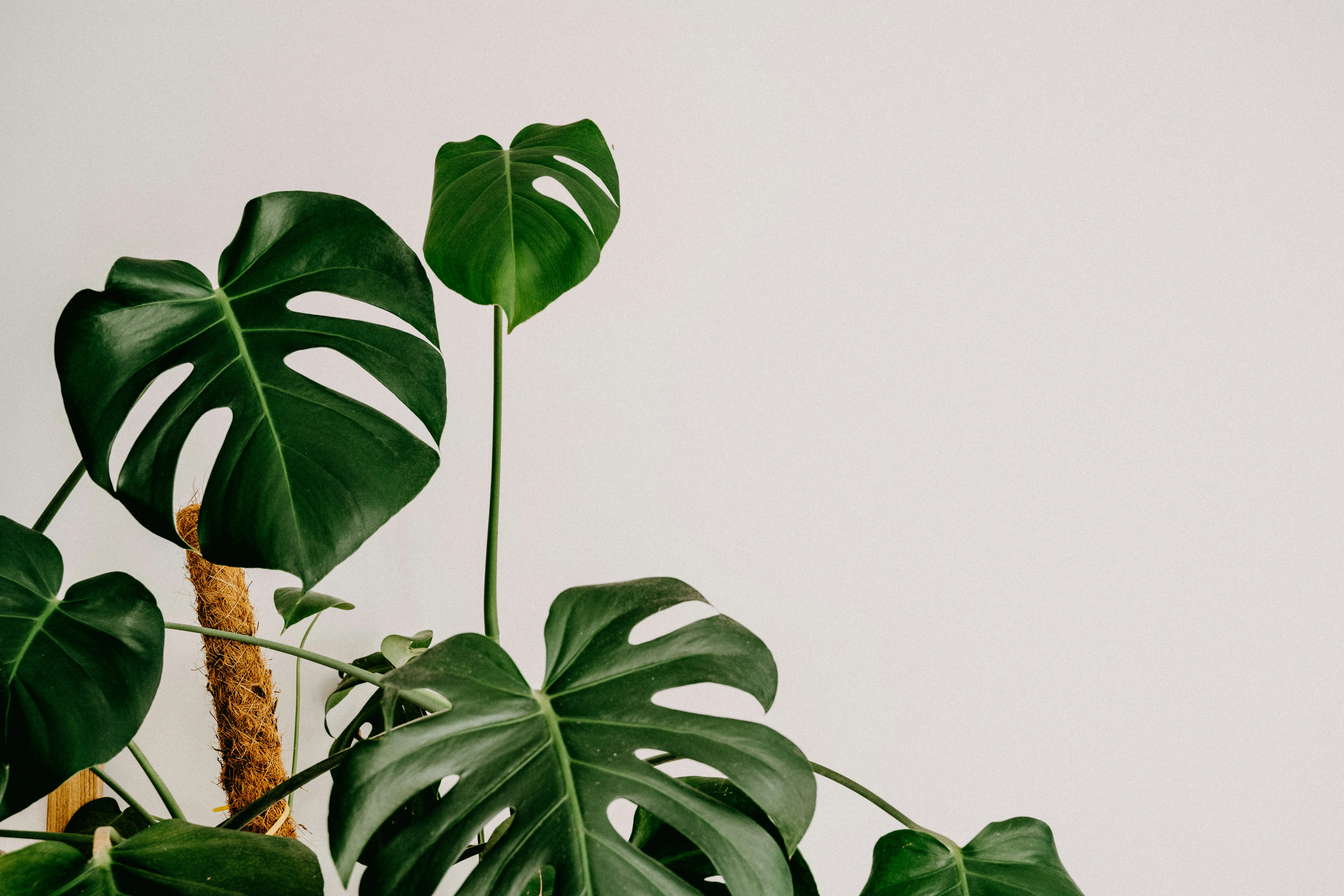
The Monstera deliciosa is hands-down the most popular indoor plant in the world. With its enormous fenestrated leaves, architectural habit and reputation for being beginner-tolerant, it conquered living rooms, offices and Instagram. Native to the humid tropical forests of Mexico and Central America, it’s an epiphytic vine that climbs along trunks using aerial roots.
In its natural ecosystem, it grows under filtered canopy light, in 70-90 % constant humidity, in a substrate rich in organic matter but very free-draining. Reproducing those conditions at home isn’t complicated — but you need the right moves. This guide covers everything you need to know to make your Monstera thrive, whether you just adopted one or have lived with it for years.
If you’re new to indoor plants, the Monstera is an excellent first tropical vine — but check our 15 easiest beginner plants list if you want to cut your teeth on more forgiving species first.
🌿 Quick fact sheet: Monstera deliciosa care summary on its dedicated page — light, watering, humidity, toxicity at a glance.
Monstera Deliciosa: Quick ID
| Trait | Detail |
|---|---|
| Latin name | Monstera deliciosa (Liebm., 1849) |
| Family | Araceae |
| Origin | Mexico, Guatemala, Panama (tropical forest) |
| Type | Hemi-epiphytic vine |
| Growth | Fast (30-60 cm per year in good conditions) |
| Indoor height | 2 to 4 m on a moss pole |
| Toxicity | Yes for cats, dogs and children (oxalate crystals) |
| Difficulty | ★★☆☆☆ — easy if you avoid overwatering |
The word deliciosa refers to its fruit, edible when ripe (taste between banana and pineapple) — but indoors it rarely flowers and fruits. Never eat an unripe fruit: it contains the same oxalate crystals as the rest of the plant and causes severe irritation.
Watering: the golden rule
The #1 cause of Monstera death is overwatering. More than 70 % of failing indoor Monsteras are victims of too-frequent watering — not lack of water. Roots, suffocated by constantly soaked substrate, eventually rot and the plant can’t absorb water or nutrients. Hence the painful paradox: a thirsty plant often looks like a drowned one (limp, drooping leaves), and many overwater further at that point.
A watering protocol that works
- Check moisture before every watering: poke your finger 3-4 cm into the substrate. If it’s still moist, wait.
- Water deeply when the top 3 cm are dry.
- Let water drain through completely. Empty the saucer after 15 minutes — a Monstera should never sit in water.
- Adjust by season: about once a week in spring/summer, every 10-15 days in fall, every 2-3 weeks in winter with moderate heating.
- Use room-temperature water, ideally rested for 24 h to off-gas chlorine. Hard tap water can stain leaves long-term.
SPRAIA tip: our smart watering reminders factor in the species, the season, your home’s light level, even local weather. Soon, Bluetooth sensor compatibility (Xiaomi Mi Flora, SwitchBot) will let you measure exact soil moisture for ultra-precise alerts.
Are you overwatering or underwatering?
| Symptom | Likely cause | Action |
|---|---|---|
| Yellow soft leaves, spongy stem base | Chronic overwatering | Stop watering 2 weeks, repot, check roots |
| Leaves curling inward | Underwatering | 20-min sink soak, gradual recovery |
| Brown crispy leaf edges | Dry air, hard water | Mist, filtered water, humidifier |
| Water droplets on leaf tips in morning | Guttation — too much water | Space out waterings |
For more, our complete watering guide for indoor plants covers advanced techniques (bottom watering, capillary irrigation, rainwater).
Ideal light: not too much, not too little
The Monstera is often sold as a “low-light tolerant” plant. That’s partly true: it survives in a dark room, but doesn’t thrive there. Without enough light, new leaves stay small, unfenestrated (no holes), and it develops long etiolated stems reaching toward the window.
Optimal exposure
- Bright indirect light: ideal. Near an east- or west-facing window, 1-2 m from a south-facing bay filtered with a sheer curtain.
- Avoid prolonged direct sun: more than 2 hours of southern sun burns leaves (dry white then brown patches).
- Tolerated shade: your Monstera will survive in a dim corner, but growth slows dramatically and new leaves stay solid.
Testing light at home
A simple trick: at noon on a clear day, place your hand between the window and the plant. If the cast shadow is sharp, you have bright light; if blurred, indirect; if barely visible, low light. Our complete indoor plant light guide covers lux units, PAR and orientation-by-orientation exposure.
Why don’t my leaves have holes?
Fenestrations only appear on adult leaves and require:
- Bright light (at least 800 lux consistently)
- A climbing support (sphagnum moss pole or coco pole)
- Patience: a young plant’s first leaves are never fenestrated
Without a pole, your Monstera stays juvenile and rarely fenestrates. That’s the main reason a 5-year-old Monstera can still have solid leaves.
Temperature and humidity: tropical conditions
| Parameter | Ideal | Tolerated | Limit |
|---|---|---|---|
| Temperature | 18-25 °C | 15-30 °C | < 12 °C danger |
| Humidity | 60-80 % | 40-60 % | < 30 % brown edges |
In winter, central heating drops indoor humidity to 25-35 %, too dry for a Monstera. Three solutions:
- Mist leaves 2-3 times per week with non-hard water
- Place a humidifier nearby (most effective in practice)
- Group several plants with a tray of moist clay pebbles underneath
Avoid cold drafts (front door, open winter window) which trigger sudden lower-leaf drop.
Substrate and repotting
The right substrate
A Monstera thrives in light, free-draining and aerated substrate. Skip pure universal potting soil: too dense, it holds water and suffocates roots.
The ideal mix:
- 50 % quality houseplant potting soil
- 25 % perlite or fine pumice (drainage)
- 20 % pine bark (aeration + epiphytic conditions)
- 5 % activated charcoal (anti-rot)
You can also go 100 % mineral substrate, Lechuza PON style: zero root disease, spaced watering, ideal for travelers. Subject of our complete mineral substrate guide.
When to repot?
Repot every 2 years in spring, sooner if:
- Roots are coming out of drainage holes
- Water runs through in seconds (exhausted substrate)
- Growth has stopped despite good conditions
- The pot feels abnormally light after watering
En pratique, étape par étape
6-step repotting procedure for a healthy Monstera.
-
Prepare your work area
Lay a tarp or newspaper, ready your new pot with a layer of clay pebbles at the bottom, and pre-mix your substrate.
-
Remove the plant from its pot
Tilt the pot and pull the plant gently by the stem base. If it resists, tap the pot's sides or cut it open if necessary — never pull on leaves.
-
Inspect and untangle the roots
Cut with sterilised pruners every black, soft or smelly root (rot). Gently untangle circling roots if root-bound.
-
Settle in the new pot
Centre the root ball in the new pot. The crown (stem/root junction) should sit 2 cm below the rim. Fill with substrate, lightly pressing without compacting.
-
Add a moss pole if needed
If your Monstera exceeds 60 cm, this is the moment to add a sphagnum moss pole. Plant it against the root ball, gently tie main stems with raffia.
-
Water and place in light
Water generously to settle the substrate, let drain completely. Place in bright indirect light without direct sun, don't water for 7 days to let roots heal.
Propagation: multiplying your Monstera
Propagating a Monstera is surprisingly simple and yields free new plants (or gifts). Golden rule: each cutting must contain at least one node with an aerial root, ideally two. No node = no root.
Water method (most visual)
- Spot a stem with at least one node + one aerial root, ideally just below a leaf.
- Cut 1-2 cm below the node with sterilised pruners (70 % alcohol).
- Submerge the cutting in a jar, node under water, leaf in the air.
- Place in bright indirect light. Change water every 5 days.
- First roots appear in 2-3 weeks.
- When roots reach 8-10 cm, transfer to moist aerated substrate.
Our complete water propagation guide covers every variant (water + perlite, sphagnum, moss pole).
Direct sphagnum method
Faster to get an autonomous plant: cutting laid on moist sphagnum in a half-closed zip bag, at 22-25 °C. Roots in 10-15 days, transfer to substrate in 4 weeks.
Pests and problems
Yellow leaves
The most common signal. #1 cause: overwatering (yellow + soft leaves + wet soil). #2 cause: nitrogen deficiency on exhausted substrate (older leaves yellow uniformly). Our 9 yellow-leaf causes guide provides a complete diagnosis.
Dry brown spots
Sunburn (direct sun) or chlorine burn (hard tap water). Solution: move 1 m from window, filtered or rain water.
Soft brown spots
Fungus, often linked to stagnant humidity. Cut affected leaves, space waterings, copper treatment if it spreads.
Brown dry aerial roots
Normal in dry indoor air. You can guide them into a moist sphagnum pole, or just cut them off if bothersome — it doesn’t weaken the plant.
No fenestrations
Lack of light + no support. Move closer to the window, add a pole, be patient (2-3 new leaves before seeing the result).
Mealybugs
White cottony clumps in leaf axils. Treat fast with 70 % alcohol on a cotton swab + diluted Castile soap spray. Our mealybug guide covers the protocols.
Thrips
Small elongated insects sucking sap → silvery leaves with black dots. See our complete thrips guide.
Popular cultivars
The Monstera deliciosa has cousins from the same family — often confused:
- Monstera deliciosa “Thai Constellation”: stable cream variegation, slow growth, high price (€150-400)
- Monstera deliciosa “Albo Variegata”: unstable white variegation, fragile, highly sought
- Monstera adansonii (false Swiss cheese): smaller leaves, holes but no splits, climbing habit
- Monstera obliqua: often confused with adansonii, mostly holes and little leaf material, extremely rare and fragile
- Monstera dubia: flat leaves pressed against support, silvery variegation in juvenile stage
For more on this fascinating family, see our rare plants for collectors guide.
Annual care calendar
| Month | Priority |
|---|---|
| Mar-Apr | Repot if needed, resume watering, first fertiliser |
| May-Aug | Weekly watering, biweekly fertiliser, misting in dry weather |
| September | Bring inside if outside, last fertiliser |
| Oct-Nov | Space out waterings, stop fertiliser |
| Dec-Feb | Minimal watering (every 2-3 weeks), humidifier if heating is strong |
Mistakes to absolutely avoid
- Watering on a fixed schedule without checking the substrate → #1 cause of mortality.
- Letting it sit in standing water → root rot in 48 h.
- Cutting aerial roots for aesthetics → that’s how the plant absorbs moisture and stability.
- Repotting in winter → the plant is dormant, heals poorly and often crashes.
- Buying a “cheap Albo” online → variegation is often hand-painted, beware.
Monstera FAQ
The most common questions plant parents ask about the Monstera deliciosa.
- There's no universal frequency. Always check substrate moisture: poke your finger 3-4 cm in. If dry, water deeply; if not, wait. On average: every 7 days in summer, every 14-21 days in winter. The key factor is temperature and light, not the calendar.
- Three possible causes. 1) Plant too young — first juvenile leaves are always solid, fenestrations appear after 4-6 new leaves. 2) Lack of light — needs bright indirect of at least 800 lux. 3) No climbing support — a Monstera without a pole stays juvenile and rarely fenestrates.
- Yes. Every part contains calcium oxalate crystals, irritating to mouth, tongue and esophagus. Symptoms if ingested: drooling, oral pain, vomiting. Place out of reach and call your vet if your pet has chewed leaves.
- Yes, without harming the plant. Aerial roots help climb and absorb humidity. If aesthetically bothersome, cut them at the base with sterile pruners. You can also guide them into a moist sphagnum pole for better water absorption.
- Yes, in temperate zones with care. Take it out gradually when nights stay above 15 °C, in bright shade (never full sun). Bring back before nights drop below 13 °C. Inspect leaves before bringing back to avoid introducing pests (thrips, mealybugs).
- Too much: yellow soft leaves, surface-wet soil, spongy stem base, sometimes mouldy smell. Too little: leaves curling inward, dry crispy edges, soil pulled away from pot, light pot. When in doubt, wait 2 days rather than water. The Monstera survives a deficit far better than excess.
- In optimal conditions (bright light, 60 % humidity, monthly fertiliser, pole), a Monstera produces a new leaf every 4-6 weeks in spring/summer and can gain 30-60 cm a year. In winter, growth slows dramatically or stops — that's normal.
- Yes, at least once a month. Dust blocks photosynthesis and encourages spider mites. Wipe each leaf with a damp cloth (warm water + a drop of mild soap), top AND bottom. You can also shower the plant every 2-3 months in lukewarm water.
Conclusion: a companion for decades
The Monstera deliciosa is a generous plant that forgives many mistakes. With controlled watering, good light, a pole and biennial repotting, it’ll reward you with spectacular growth and jungle-worthy fenestrated leaves. It’s also a plant that lives long: a well-cared Monstera can be with you for 20, 30, 40 years, become a real centrepiece, even pass through generations.
Use SPRAIA to track its needs daily: home-tailored watering reminders, photo-based visual diagnosis, personalised seasonal advice. And above all, observe your plant — it communicates much more than you’d think.