Yellow Leaves on Indoor Plants: 9 Causes and Solutions (Complete Diagnosis)
Yellow leaves on your plants? Diagnose the 9 most common causes: overwatering, light, deficiencies, pests — with step-by-step solutions.
By SPRAIA editorial team · Method: botanical sources, field feedback and editorial validation
Yellow leaves are the universal alarm signal of indoor plants. But this symptom can mean radically different things: chronic overwatering, lack of light, nitrogen deficiency, even a thrips attack. Diagnosing correctly means avoiding “treatments” that make the problem worse.
This guide walks through the 9 most common causes of yellowing, with for each: the precise symptoms that distinguish this cause from others, the step-by-step visual diagnosis, and the concrete solution to apply. You’ll leave with a 5-minute diagnostic protocol to take back control.
If you’re new, keep this in mind: a yellow leaf doesn’t “re-green”. The goal isn’t to recover the affected leaf (often lost), but to stop the cause so new leaves grow healthy.
Quick visual diagnosis: where to look first
Before diving into the 9 causes, do these 5 observations in 2 minutes — they orient 80 % of the diagnosis.
| Observation | Likely indicates |
|---|---|
| Yellow soft leaves, wet surface soil | Overwatering (#1 cause) |
| Yellow dry leaves, soil pulled away from pot | Underwatering |
| Generalised yellowing, stretched stems | Lack of light |
| Older leaves yellow, new ones pale | Nitrogen deficiency |
| Yellow between veins, veins stay green | Iron chlorosis (Fe deficiency) |
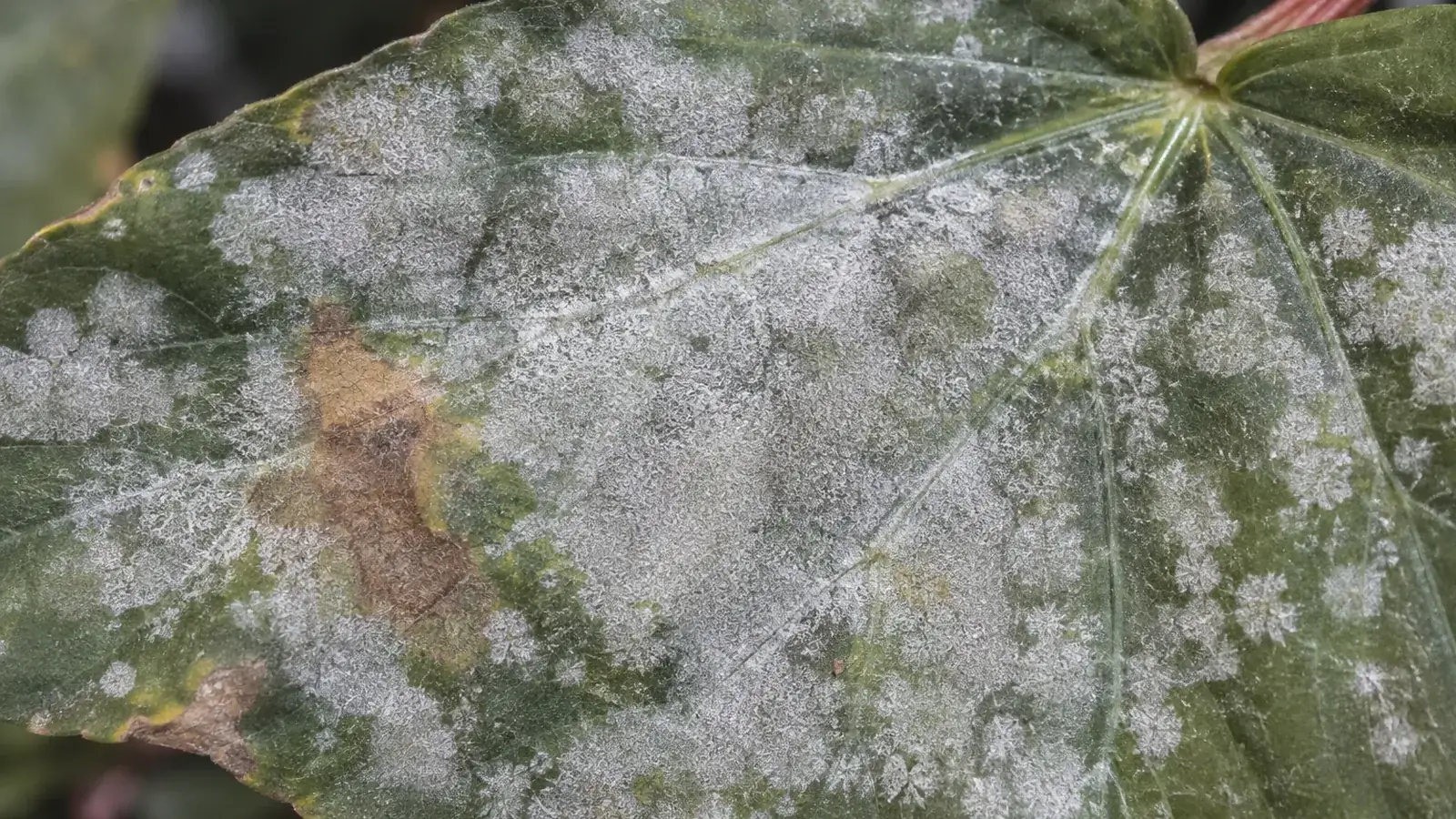
| Small silvery dots or fine holes | Pests (thrips, spider mites) |
| Brown edge + progressive yellowing | Dry air / hard water |
| Sudden yellowing on one side | Cold draft |
| Lower leaves yellow then drop | Normal aging (≠ disease) |
SPRAIA tip: photograph the affected leaf AND the base of the plant (with substrate visible). Our AI diagnosis cross-references both images to suggest the most likely cause among the 9 below.
1. Chronic overwatering — the #1 cause (50 % of cases)
By far the most common cause of yellow leaves indoors. A constantly wet substrate suffocates roots, which eventually rot and can no longer absorb water or nutrients. Painful paradox: the plant “is thirsty” while drowning, leaves go soft and yellow — and many overwater further at that point.
Specific symptoms
- Yellow soft, drooping leaves (not dry)
- Soil always wet at surface, sometimes mouldy smell
- Spongy stem base
- Black fungus gnats appearing around the pot
- Small black or brown spots on lower leaves
Most affected plants
Monstera, Philodendron, Calathea, Ficus, Pilea, Alocasia. Succulents die from overwatering in 90 % of cases.
Step-by-step solution
- Stop watering immediately for 7-14 days
- Unpot the plant, inspect roots
- Cut black/soft roots with sterile pruners
- Repot in aerated substrate (potting soil + perlite + bark)
- Pot with drainage holes mandatory
- Resume very gradual watering: 50 % of usual volume for 1 month
Our complete watering guide details the finger method and species-specific techniques.
2. Underwatering — the opposite cause (15 % of cases)
Opposite of overwatering, chronic lack of water dries lower leaves first. The plant sacrifices old leaves to keep new ones. Luckily, rarer and faster to fix.
Specific symptoms
- Yellow dry, crispy leaves
- Edge curled or rolled downward
- Very dry soil, sometimes pulled away from pot
- Abnormally light pot
- The plant “drinks” a lot when soaked
Solution
- Rehydrate by bottom soak: submerge the pot in a bucket up to the crown, 20 min
- Drain completely before returning to its spot
- Resume regular watering (check moisture with finger)
- Cut completely dried leaves (lost permanently)
3. Lack of light (12 % of cases)
Without enough light, chlorophyll degrades and the plant “eats” its own reserves. Leaves yellow uniformly, growth stops, and the plant looks dull and etiolated.
Specific symptoms
- Progressive uniform yellowing
- Stems visibly stretching toward the window
- New leaves smaller and paler than older ones
- Near-zero growth for months
- Fenestrated leaves (Monstera) growing without holes
Solution
- Move closer to a window (max 1-2 m from an east/west bay)
- No better exposure? Add an LED grow lamp (15-30 W for 1-2 plants, 12 h/day)
- Quarter-turn rotation weekly for balanced growth
Our complete indoor plant light guide explains how to measure light at home (lux, PAR, free apps).
4. Nitrogen (N) deficiency — pale older leaves (8 % of cases)
Nitrogen is the most consumed nutrient. When the substrate is exhausted (12-18 months without fertiliser or repotting), older leaves sacrifice their nitrogen for new ones, and yellow.
Specific symptoms
- Older leaves yellow first (lowest)
- Uniform yellowing (not mottled)
- New leaves smaller and paler
- Slowed growth
Solution
- Liquid houseplant fertiliser at normal dilution, every 15 days from April to September
- Repot in fresh substrate in spring if the plant has been in the same pot for 2 years
- In winter: never fertilise (the plant doesn’t consume)
5. Iron chlorosis — iron deficiency (5 % of cases)
Spectacular and recognisable: veins stay green but the rest of the leaf yellows. Cause: water too hard blocking iron absorption, or iron-depleted substrate.
Specific symptoms
- Yellow between veins, veins clearly green
- Mostly affects young leaves (opposite of nitrogen)
- More common on Calathea, Hibiscus, Citrus, Gardenia, Hydrangea
Solution
- Switch to rain or filtered water
- Add iron chelate (sold in nurseries) once a month for 3 months
- Check substrate pH (ideal 5.5-6.5)
- If a calcium crust is visible on the root ball: repot in fresh substrate
6. Pests — thrips, mites, mealybugs (5 % of cases)
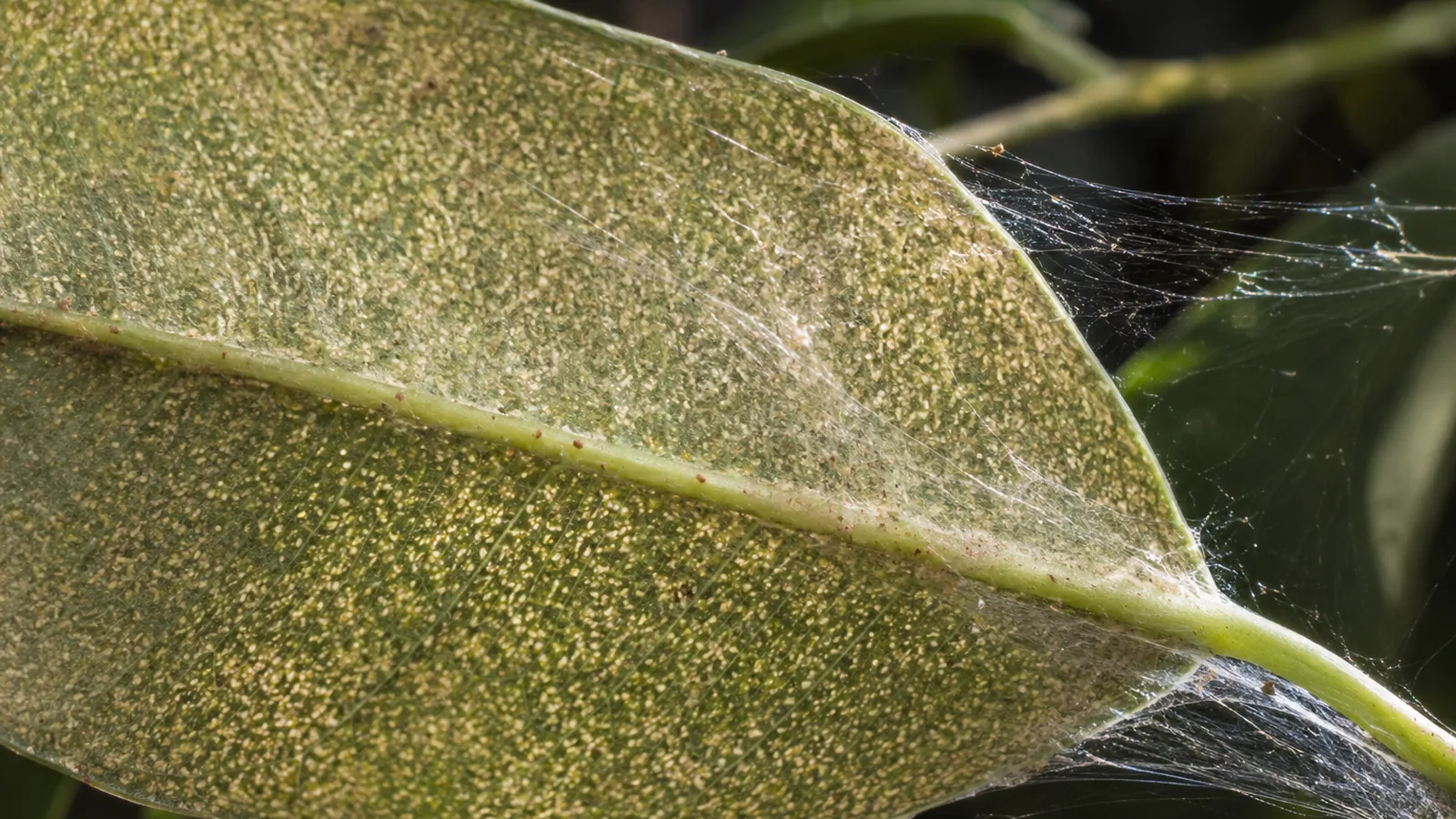
Sap-sucking pests cause distinctive yellowing: dotted, mottled or silvery. Often accompanied by fine webbing or small black dots (excrement).
Identifying the pest
- Thrips: silvery leaves with small black dots, translucent patches. See thrips guide.
- Spider mites: yellow-dotted leaves + fine webs under leaves, dusty plant
- Mealybugs: white cottony clumps in leaf axils + sticky honeydew. See mealybug guide.
General solution
- Isolate the plant from others immediately
- Lukewarm shower to dislodge visible pests
- Castile soap spray (5 ml/L) or 70 % alcohol on swab (mealybugs)
- Renew 3 times every 5 days to break the breeding cycle
- For massive infestations: neem oil or organic horticultural product
7. Air too dry — brown edges then yellowing (3 % of cases)
In winter with heating, ambient humidity drops below 30 % in most homes. For tropicals, that’s too dry: leaf edges brown, then the whole leaf yellows.
Specific symptoms
- Dry brown crispy edge progressing inward
- Leaf tip blackened
- Yellowing progressing from the edge
- Most visible on Calathea, Maranta, Alocasia, Ferns
Solution
- Air humidifier (most effective, aim 50-60 %)
- Misting 2-3 times/week with non-hard water
- Group plants + tray of moist clay pebbles
- Move away from radiators in winter
8. Cold shock or draft (2 % of cases)
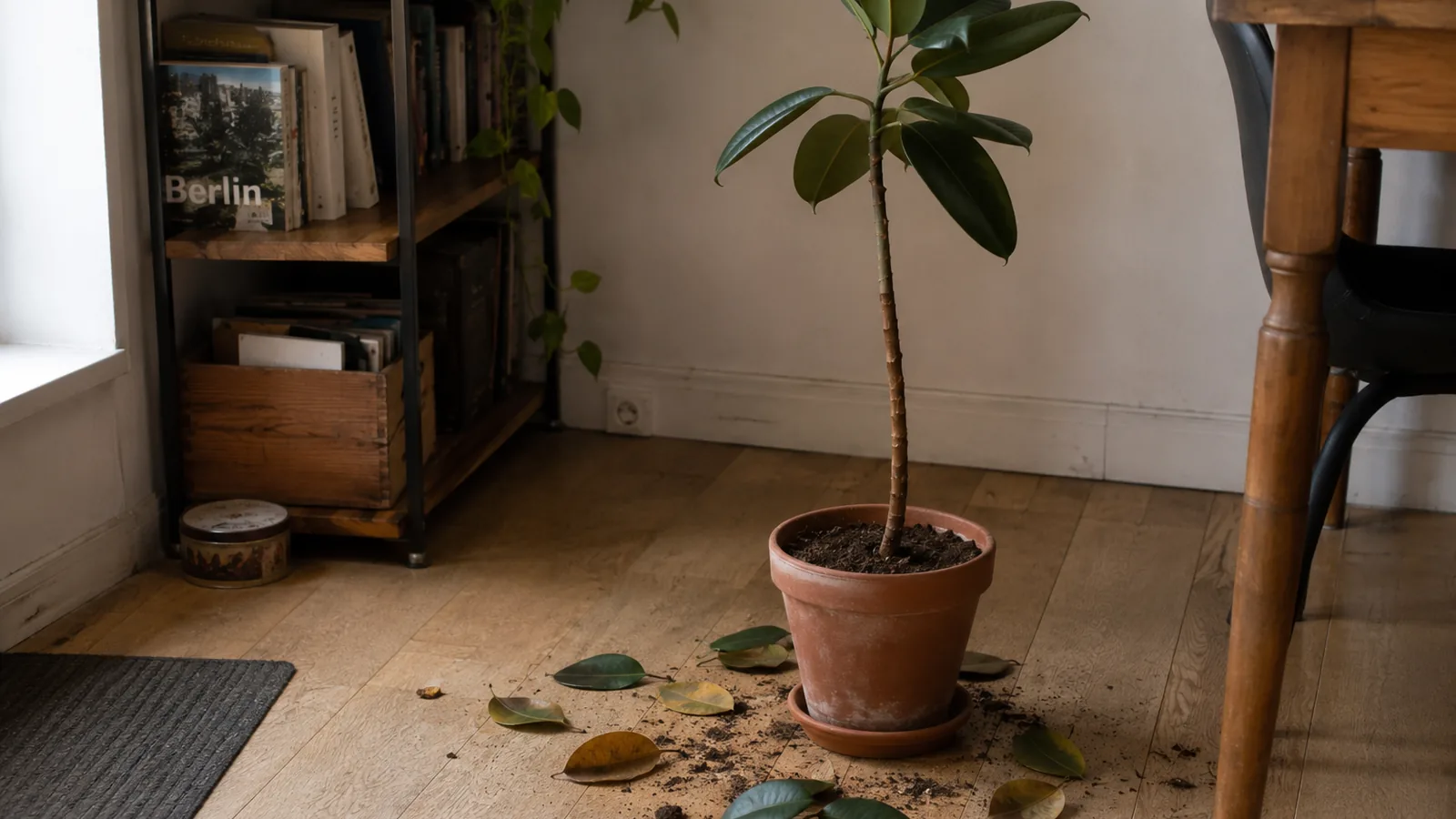
A sudden temperature drop (passing front door in winter, window left open at night) causes rapid localised yellowing on the cold-exposed side.
Specific symptoms
- Sudden yellowing (within days)
- Localised on one side or lower part
- Often accompanied by leaf drop
- Common on Ficus, Dracaena, Hibiscus
Solution
- Move away from cold sources immediately (door, window, AC)
- Cut totally yellowed leaves
- Maintain stable temperature (>15 °C minimum for most tropicals)
- Patience: the plant will rebound in spring if no other stress
9. Normal aging — not a disease
All plants naturally renew their leaves. Lower leaves, the oldest, yellow and drop — that’s physiological. As long as:
- Yellowing only affects the base
- New leaves are healthy
- Overall growth is normal
→ No worry. Cut the yellow leaf at its base and continue your routine.
Summary: 9 causes at a glance
| # | Cause | Key symptom | Immediate action |
|---|---|---|---|
| 1 | Overwatering | Yellow + soft + wet soil | Stop watering 14 d, unpot |
| 2 | Underwatering | Yellow + dry + pulled-away soil | 20-min bottom soak |
| 3 | Lack of light | Uniform etiolation | Closer to window, LED lamp |
| 4 | Nitrogen deficiency | Yellow lower leaves | Liquid fertiliser |
| 5 | Iron chlorosis | Green veins | Filtered water + iron chelate |
| 6 | Pests | Silvery/black dots | Shower + Castile soap |
| 7 | Dry air | Brown edge + yellow | Humidifier |
| 8 | Cold shock | Sudden localised yellow | Move from cold |
| 9 | Aging | Single low leaves | None (cut) |
5-minute diagnosis protocol
Before acting, follow this checklist:
- Touch the substrate 3-4 cm deep → wet? dry?
- Assess the light → is the noon shadow sharp or blurry?
- Inspect leaves under good light → small dots? webs? white clumps?
- Count affected leaves → only old ones? all? one side?
- Last repotting date → over 18 months?
With these 5 data points, cross-reference with the table above and you’ll identify the cause in 90 % of cases. For the remaining 10 %, SPRAIA’s photo diagnosis can refine.
Mistakes to avoid
”I’ll water more, my plant is thirsty”
The fatal mistake. Before watering more, check substrate moisture. In 50 % of cases, you’ll be watering an already-drowned plant and accelerating its death.
”I’ll add fertiliser, it’s deficient”
Fertiliser on rotten roots or waterlogged soil burns what’s left. Never fertilise a stressed plant.
”I’ll move it full south for more light”
A shade-acclimatised plant can’t handle sudden direct sun. Increase light gradually over 2-3 weeks.
”I’ll cut all the yellow leaves”
Massive cutting worsens stress. Only cut completely yellow leaves (lost). Partially yellow leaves still produce some chlorophyll.
How to prevent yellow leaves recurring
Once the problem is solved, here are the 5 practices that eliminate 80 % of recurrence risk:
- Finger test before each watering: 30 seconds to save a plant
- Quarter-turn weekly rotation: balanced growth
- Fertiliser April-September only: not in winter
- Monthly leaf inspection: catch pests early
- Repot every 2 years in spring: fresh substrate
Yellow leaves FAQ
The most common questions about plant yellowing.
- No. Once chlorophyll is degraded, yellow tissue never re-greens. The goal isn't to recover the affected leaf (often lost), but to stop the cause so new leaves grow healthy. Cut the leaf at its base if fully yellow, keep it if partial.
- Only cut fully yellow leaves (lost permanently). Partially yellow leaves still produce some chlorophyll and energy for the plant — leave them until they're completely dry or fall off on their own.
- Two possibilities. 1) Normal aging: the plant renews old leaves, physiological and needs no action. 2) Nitrogen deficiency: if the plant has had no fertiliser or repotting for 12-18 months, it pulls nitrogen from old leaves. Solution: liquid fertiliser every 15 days from April to September.
- For a few species (Philodendron 'Painted Lady', Pothos Neon), yes — young leaves are yellow-green before turning green. Generally: no. If new leaves come out yellow while old ones are green, it's likely iron chlorosis. Switch to filtered water and add iron chelate.
- Depends on the cause. Underwatering: 24-48 h after soak, plant stands back up. Lack of light: 2-4 weeks for healthier new leaves. Overwatering: 4-8 weeks if roots weren't too damaged. Nitrogen deficiency: 2-3 weeks after first fertiliser. Patience.
- Not necessarily. If the stem base is still firm and green, hope remains. Possible causes: massive overwatering (rotten roots), brutal thermal shock, massive pest attack. Action: unpot immediately, inspect roots, cut black/soft ones, repot in fresh well-draining substrate, don't water for 10 days to let roots heal.
- The Calathea is very sensitive to 3 winter-aggravated factors: dry air (heating), hard water (limescale builds up), and temperature variations. Combined solution: humidifier (60 % minimum), rain or filtered water only, away from radiators and drafts. Our Calathea guide details all its quirks.
- If it's the oldest (lowest) and the rest of the plant is healthy: no, likely normal renewal. If it's a young leaf or other yellowings follow within days: yes, run the 5-step diagnosis above to identify the cause before it spreads.
Conclusion: don’t panic, diagnose
A yellow leaf is never a death sentence. It’s a signal — often early — giving you time to correct the cause before the plant is in real danger. The reflex to build: observe before acting, identify the cause, then apply the right solution.
The SPRAIA app speeds up this diagnosis: photograph the affected leaf and the substrate, the AI cross-references symptoms with your plant species and suggests the most likely cause + adapted protocol. You gain confidence and reactivity — your plants thank you.