Moving Houseplants Outdoors in Summer: The Complete Guide
Benefits, hardening off, placement, watering, pests and the autumn move back in: the complete guide to putting your houseplants outdoors in summer safely.
By SPRAIA editorial team · Method: botanical sources, field feedback and editorial validation
When the warm days arrive, the thought inevitably crosses your mind: what if I moved my houseplants outdoors this summer? That’s an excellent instinct. Outdoors, your plants enjoy incomparable light, moving air and cool nights that trigger growth impossible to reproduce in a living room. But moving houseplants outdoors in summer is not something to improvise: a too-abrupt jump from the living room to the terrace can scorch the foliage in a single afternoon. This complete guide explains which plants can go out, how to harden them off gradually, where to place them, how to adjust watering, and above all how to bring them back in calmly before the first chill. Follow the rhythm of the seasons and your plants will repay you a hundredfold.
Why moving houseplants outdoors in summer changes everything
Most of our houseplants are in fact tropical or subtropical species that, in their native habitat, grow in bright light filtered by the canopy. Our interiors, even the brightest ones, deliver only a fraction of the light energy they would receive outdoors. That’s why a summer outside often acts like a rejuvenating cure.
Incomparable light
Behind a window, the glass filters part of the light spectrum and brightness drops dramatically as soon as you move away from the pane. Outdoors, even in the shade, a plant receives 10 to 20 times more light than one metre from a south-facing window. This abundance boosts photosynthesis and translates into larger, greener leaves spaced more closely along the stem. If you want to understand in detail how to assess each species’ light needs, our complete guide to indoor plant light covers all the basics.
Turbocharged growth
Combine intense light, warmth, outdoor air humidity and a wide day/night temperature swing, and you get the ideal conditions of the growing season. Many plant parents find that a Monstera or a Ficus produces more leaves in a single summer outdoors than in an entire year inside. Slightly cooler nights also trigger hormonal mechanisms that favour branching and, in some species, flowering.
Air that moves
Air movement strengthens stems (they thicken to withstand wind), limits the stagnant humidity responsible for fungal diseases, and disrupts the reproductive cycle of many indoor pests. A plant that has spent the summer outdoors often comes back more robust and better equipped to face winter indoors.
Which plants can go out (and which should stay in)
Not all plants react the same way to life outdoors. Before moving everything onto the balcony, sort them out.
The big winners of summer outdoors
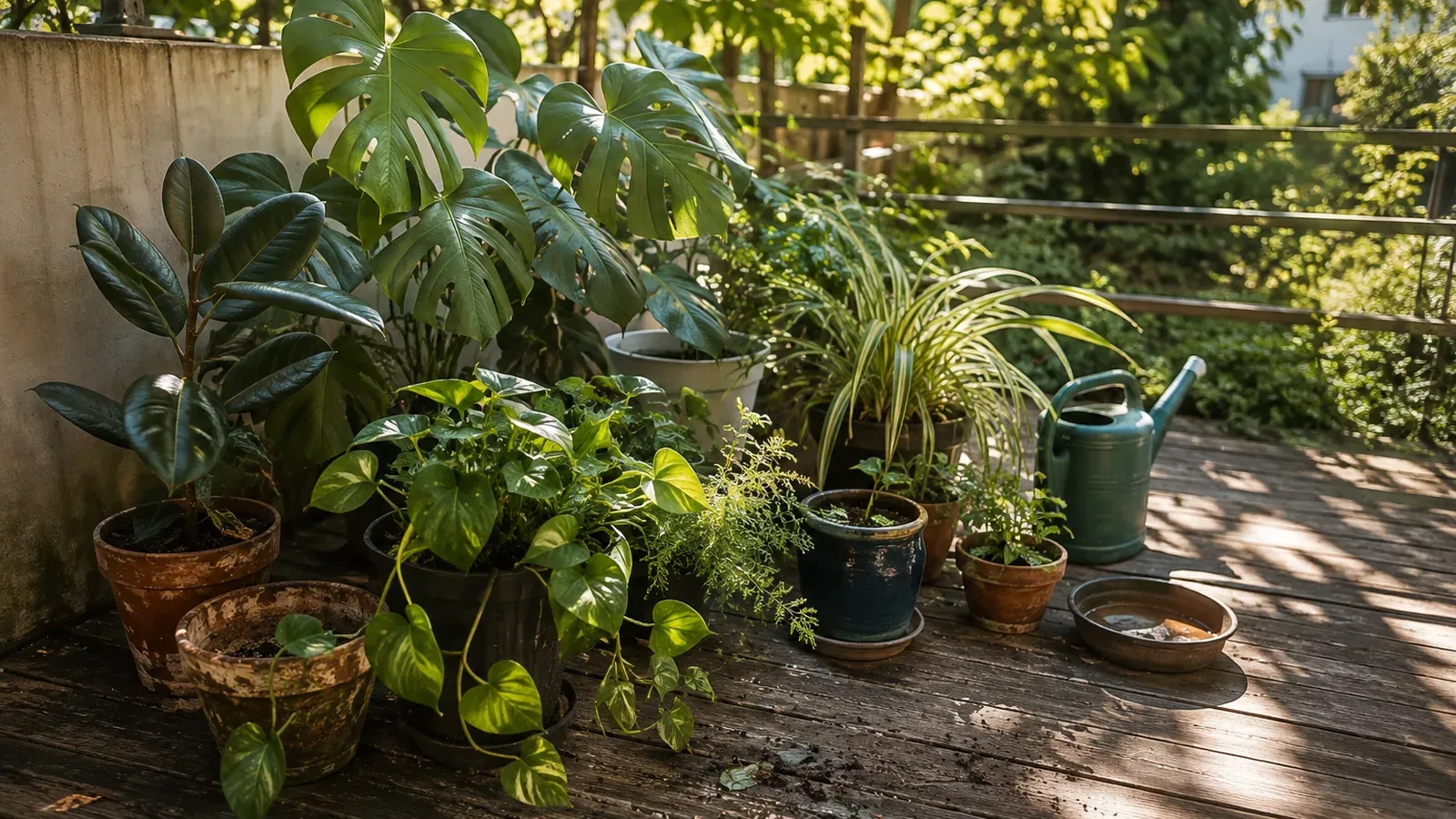
- Tropical foliage plants: Monstera, Philodendron, Ficus elastica, Pothos, Alocasia. They love summer warmth and humidity, provided they sit in bright shade.
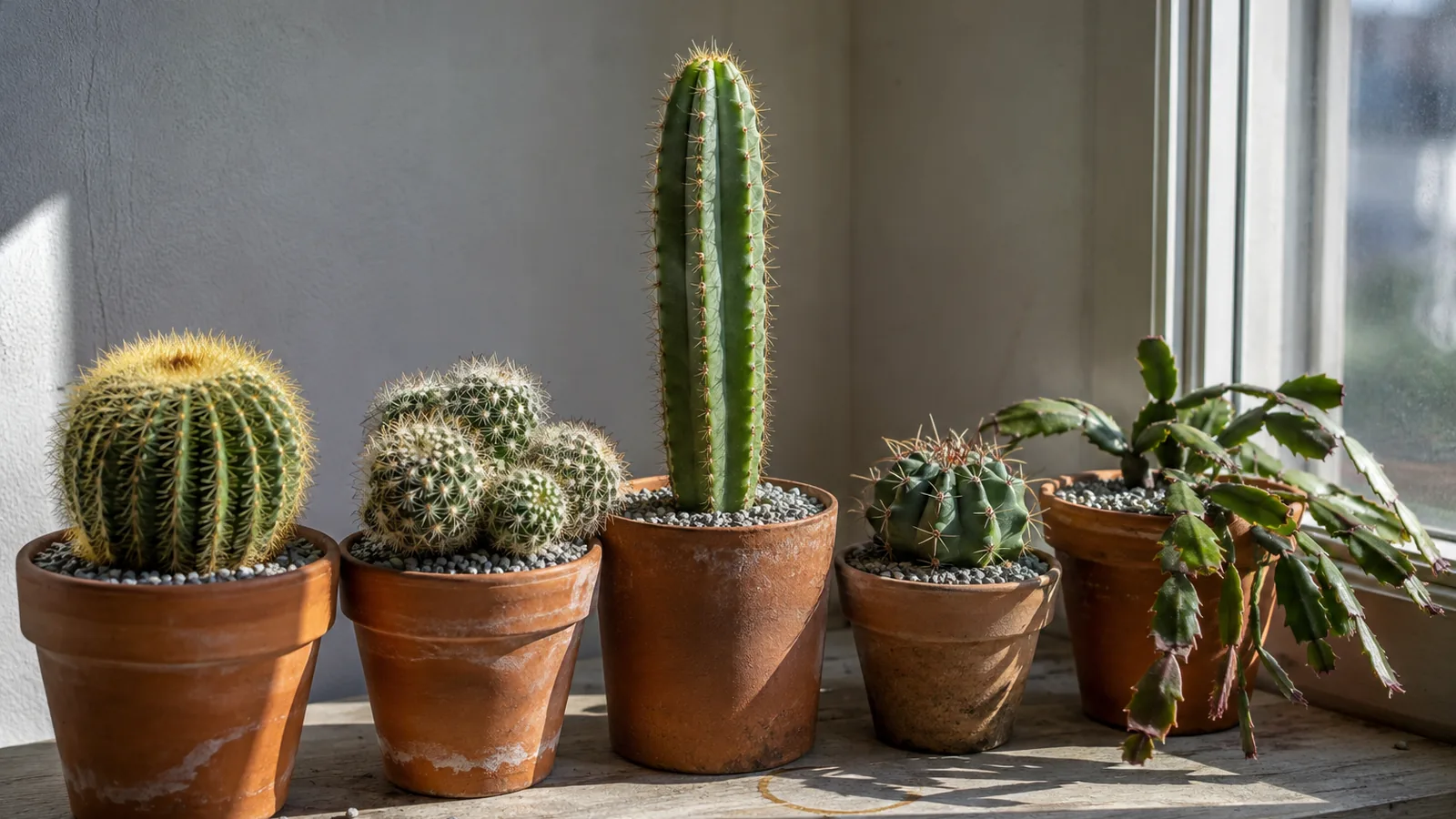
- Succulents and cacti: these are the only ones that can gradually tolerate direct sun. Outdoors they colour up, become more compact and sometimes flower. Our indoor succulents care guide details their specific needs once outside.
- Potted citrus, olive trees and laurels: built for the outdoors, they just want to go out.
- Fast-growing plants: Pilea, Tradescantia, Coleus make the most of the season.
The ones that prefer to stay inside
- Calatheas and Marantas (prayer plants): very sensitive to wind, sun and humidity swings, they often suffer outdoors. Better to leave them in a stable interior.
- Delicate ferns and some thin-leaved plants that dehydrate within hours in the slightest hot draught.
- Freshly repotted, propagated or sick plants: they need stability, not an extra environmental shock.
If you’re unsure of a plant’s exact identity and its tolerances, the SPRAIA app lets you identify the species from a single photo and check its care sheet to know whether it will handle life in the open air.
Hardening off gradually: the step you must never skip
This is THE critical point. A houseplant has never seen direct sun or felt real wind. Its leaves lack the necessary protections (thick cuticle, protective pigments). Suddenly moved into full sun, it scorches within hours: the infamous sunburn, which leaves irreversible white or brown patches.
The hardening-off schedule over 10 to 14 days
Wait until night temperatures stay reliably above 12-15 °C (often mid-May to early June depending on your region), then proceed in stages:
- Days 1 to 3: put the plant in a fully shaded spot, sheltered from wind, for only 1 to 2 hours at the end of the day. Then bring it back in.
- Days 4 to 6: extend to 3-4 hours in the shade, then leave it out for a first night if temperatures allow.
- Days 7 to 10: leave it out continuously, in bright shade, day and night.
- Days 11 to 14: for succulents and cacti only, introduce morning direct sun very gradually, one extra hour each day.
Spotting and treating sunburn
Sunburn shows as discoloured, whitish or beige patches, often in the centre of the exposed leaf. Unlike a lack of water, the tissue becomes dry and translucent. There is no going back: cut off badly damaged leaves, move the plant back into the shade, and give it time to produce new, adapted foliage. If you’re unsure whether it’s sunburn, a nutrient deficiency or a disease, a photo diagnosis with SPRAIA helps you identify the exact cause before acting.
Choosing the right spot outdoors
Once hardened off, your plant needs a spot that best reproduces its natural conditions.
Aim for bright shade
For the vast majority of houseplants, the ideal is bright shade: a very bright spot but with no direct sunbeams hitting the foliage. Think of:
- Under a light-canopied tree that filters the light.
- On an east-facing balcony (soft morning sun only).
- Under an awning, a pergola or a shade sail.
- Against a north-facing wall, very bright but never in full sun.
Avoid at all costs the direct sun from noon to 4 pm, the harshest of all, except for cacti and succulents that are already hardened off.
Beware of reflective surfaces and stored heat
A light-coloured wall, a concrete slab or a gravel floor reflect heat and light. A plant placed right in front can receive far more radiation than you’d imagine. Raise the pots up, keep them away from hot walls, and avoid enclosed corners with no air movement where heat stagnates.
Protect from strong wind
A gentle breeze is beneficial, but gusts dry out the foliage, topple pots and snap stems. Place your plants against a wall or railing, group them so they shelter one another, and weigh down light pots.
To choose the optimal spot, SPRAIA’s built-in light meter is especially useful outdoors: it measures the real brightness of a location and tells you whether it matches the species’ needs, sparing you nasty surprises.
Watering, rain and wind: adapting care to life outdoors
Life outdoors upends the watering rhythm. Heat, wind and light considerably increase evaporation.
Water more often, but always at the right time
Outdoors in high summer, a pot can dry out two to three times faster than indoors. A plant watered every ten days in the living room may demand water every two to three days on a sunny terrace. Always check the substrate with your finger to a depth of 3-4 cm before watering. Favour watering early in the morning or in the evening, never in the blazing heat: the water evaporates instantly and droplets on the leaves can act like a magnifying glass. The detailed principles in our guide on when and how to water houseplants still apply, you just need to increase the frequency.
Managing rain
Rain is generally beneficial: it rinses the foliage and provides soft, lime-free water. But after a heavy storm, empty the saucers: a pot sitting in stagnant water for several days risks root suffocation and rot. Plants sensitive to excess water (succulents, cacti) are best sheltered during very wet spells. If you notice yellowing or softening at the base, read our article on root rot to react quickly.
Fertilising during the growth push
As summer is the peak growing season, it’s the right time to feed your plants. But be careful: frequent watering leaches nutrients away faster. Use a diluted fertiliser at half strength every two weeks rather than one heavy dose, and pause all feeding during a heatwave when the plant goes dormant.
Pests and moving back in: don’t bring anything unwanted home
This is the flip side of summer outdoors: your plants become accessible to all the garden wildlife. Good management avoids many autumn setbacks.
Watching for pests all summer
Outdoors, your plants encounter aphids, spider mites, mealybugs, slugs and ants. Regularly inspect the underside of the leaves and the leaf axils. The good news: natural predators (ladybirds, lacewings) often keep populations in check. But some pests like mealybugs settle in discreetly. Our guide to identifying and eliminating mealybugs will help you act at the first signs.
Quarantine before bringing them in
Never bring a plant straight from the garden into your living room without inspection. In the warm, dry, predator-free microclimate of the indoors, a small colony becomes a widespread infestation within weeks, contaminating your entire collection. Proceed like this:
- Inspect thoroughly: leaves (top and bottom), stems, soil and the rim of the pot.
- Shower the foliage with a gentle spray to dislodge insects and dust.
- Treat preventively with insecticidal soap or neem oil if you have the slightest doubt.
- Check the bottom of the pot: slugs, woodlice and ants love to hide there.
- Isolate the plant for one to two weeks away from the others before reintegrating it.
Bring them in before the cool late-summer nights
Most houseplants suffer as soon as night temperatures drop below 12-15 °C. Don’t wait for the first frosts: from late summer / early autumn (often mid-September to early October depending on your region), when the nights cool down, prepare for the move back. A cold shock can cause all the foliage to drop at once. Gradually reacclimatise your plants to the lower light indoors, reduce watering as growth slows, and expect some to lose a few leaves while adapting — that’s normal. This move-back logic is exactly the reverse of hardening off: here too, going gradually is your best ally. And if you’re travelling just before bringing your plants in, check out our tips to keep your plants alive during the holidays.
Frequently asked questions about houseplants outdoors in summer
Answers to the most common questions before moving your plants outside.
- Wait until night temperatures stay reliably above 12-15 °C, generally from mid-May to early June depending on your region. Tropical plants are especially sensitive to cold: a single night below 10 °C can be enough to stress them. Check the weather forecast for a full week before deciding.
- Allow 10 to 14 days. Start with 1 to 2 hours in full shade, then gradually increase the duration and exposure. Only leave the plant out overnight from day 4 or 5, and only introduce direct sun for succulents and cacti, never for tropical foliage plants.
- The vast majority of houseplants, no: they need bright shade and burn in the harsh midday sun. Only succulents and cacti, once properly hardened off over two weeks, tolerate direct sun, preferably the gentler morning sun.
- Yes, considerably. Heat, wind and light speed up evaporation: a pot can dry out two to three times faster than indoors. Check the substrate with your finger daily in hot weather and water in the morning or evening. Remember to empty the saucers after rain to avoid root rot.
- As soon as nights drop reliably below 12-15 °C, often from mid-September to early October. Never aim for the first frosts: cold can make all the foliage drop. Inspect and treat each plant for pests, isolate it for one to two weeks, then gradually reacclimatise it to the lower indoor light.
Conclusion
Moving your houseplants outdoors in summer is one of the best gifts you can give them: abundant light, invigorating air and spectacular growth. The secret comes down to one word: gradualness. Harden off over two weeks, choose bright shade, water more often, watch for pests and bring them in before the cool nights. By respecting the rhythm of the seasons, you’ll turn your plants into lush, robust specimens. And to never lose the thread — identify a species, measure the light of a terrace corner, diagnose a suspicious leaf or receive a watering reminder adapted to the heatwave — keep SPRAIA in your pocket all summer. Your plants were just waiting for this to thrive.