Monstera dubia
Monstera dubia
The shingle monstera that presses its silver leaves flat against its support before fenestrating. For enthusiasts. Complete care guide.
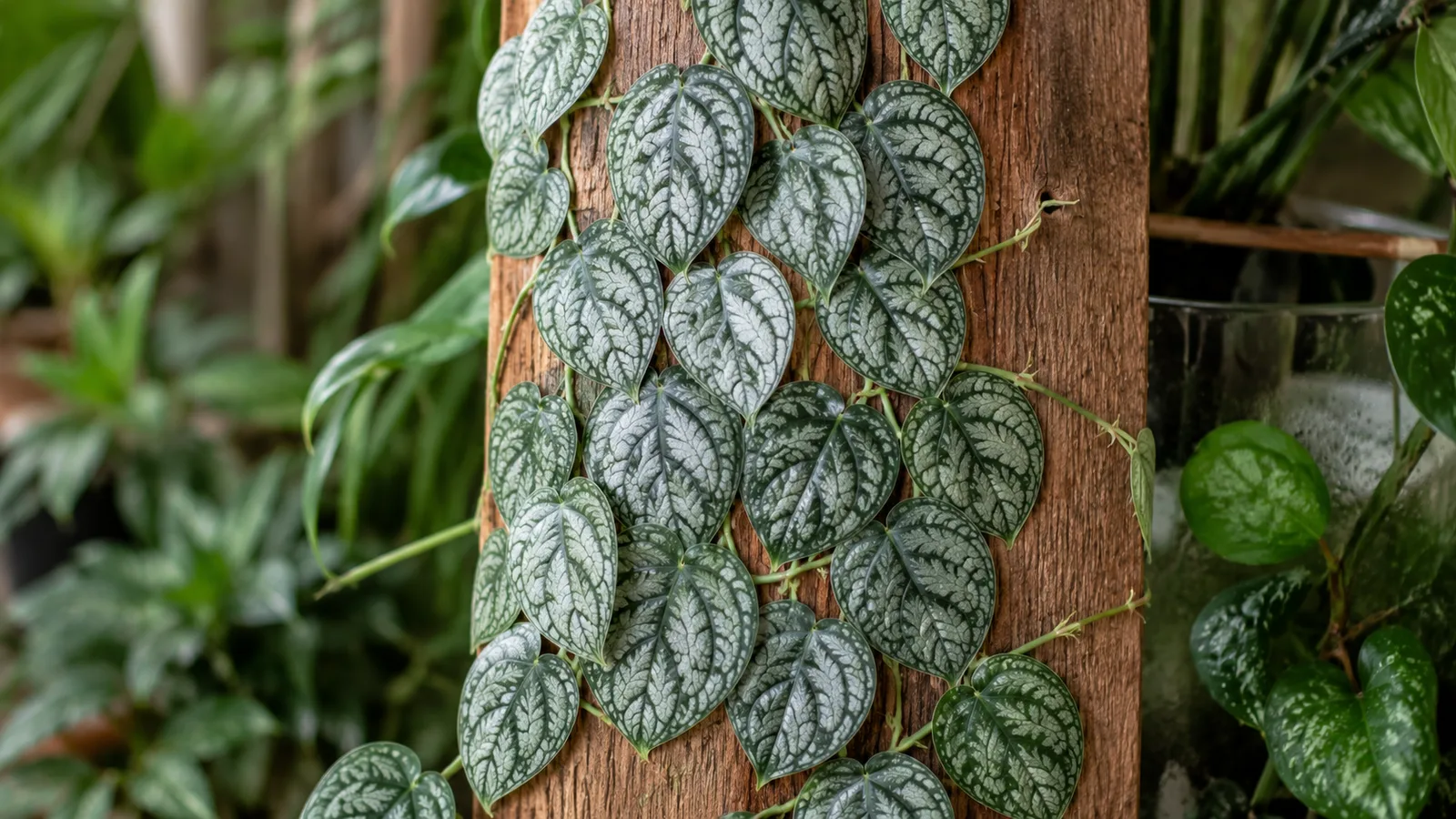
The Monstera dubia is one of the most fascinating in the genus. When young, it “shingles”: its small green-and-silver heart-shaped leaves press flat against their support like roof shingles. At maturity, climbing, its leaves lift off, grow dramatically larger and fenestrate spectacularly. A true enthusiast’s plant, with a double personality.
What you really need to know
The dubia rewards those who give it a flat support (board, totem) and good humidity. That’s the key to shingling. Bright indirect light, an airy substrate, regular watering without excess: it then grows strikingly, pressed against its support.
Light
Bright indirect light. In light that’s too low, it stops shingling and stretches. No direct sun, which burns its thin silvery juvenile leaves.
Watering
Water when the top 2-3 cm dry out: every 6 days in summer, every 10 in winter. Its thin leaves need consistent substrate moisture — neither soggy nor bone dry. A damp moss support helps the flattened leaves root in.
Humidity and temperature
Demanding: 60-85 % humidity and 18-27 °C. That’s what it takes for it to shingle well. Below 55 %, the shingling loosens and edges brown. Ideal in a cabinet, paludarium or humid room.
Mistakes to avoid
- No flat support — the plant can’t express its shingling
- Dry air — lifted leaves and crispy edges
- Soggy substrate — fast rot of the fine roots
- Insufficient light — etiolation and loss of the decorative effect
Toxicity
⚠️ Toxic to cats, dogs and children: calcium oxalate crystals throughout. Keep out of reach.
Propagation
Cut a stem section with one or two nodes and press it against a damp support; the roots grip and the plant resumes shingling. Water rooting works too. See our complete water propagation guide.
Varieties and common confusions
- Other “shingle” plants: Rhaphidophora and some Philodendron — the dubia stands out by its juvenile silver.
- For another spectacular juvenile/adult transformation, see the Monstera pinnatipartita.
- For the great classic, see the Monstera deliciosa.
Frequently asked questions
How often should I water this plant?
Water Monstera dubia every 6-10 days, adjusting for season, pot size and available light. Always check that the top of the substrate has started to dry before watering.
Is this plant toxic to cats and dogs?
Monstera dubia is classified as "toxic". As a precaution, keep it away from pets that chew leaves and contact a vet if ingestion causes symptoms.
Why are its leaves turning yellow?
Yellow leaves on Monstera dubia most often come from overwatering, low light or recent stress. First check substrate moisture, root condition and placement.
Where should I place it at home?
Monstera dubia prefers bright indirect light. Place it near a bright window without harsh direct sun, then adjust if leaves fade, brown or growth slows.
Is it beginner-friendly?
Monstera dubia needs some observation: it is manageable, but less forgiving of overwatering and poor placement.
Sources and method
This fact sheet is based on public botanical references, recognized horticultural recommendations and the SPRAIA editorial method.
- Royal Botanic Gardens, Kew
- Missouri Botanical Garden
- Royal Horticultural Society
- GBIF
Diagnose and track this plant
SPRAIA is in private beta. Join the list to test plant identification, visual diagnosis and reminders tailored to each plant.
Join the private beta