Monstera Thai Constellation
Monstera deliciosa 'Thai Constellation'
The starry cream-variegated monstera, stable and lab-cultured. Slower than the green deliciosa. Complete care guide.
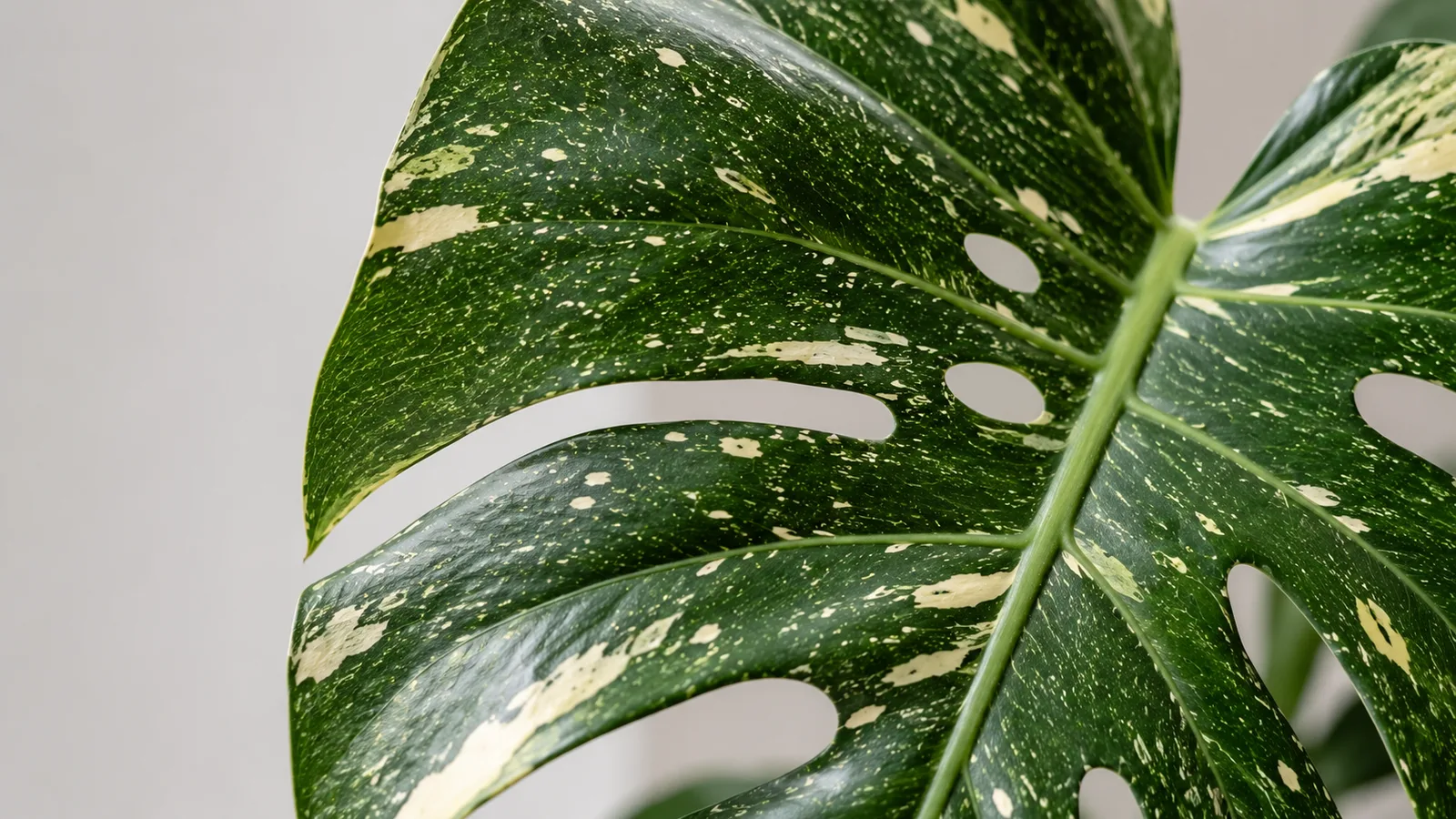
The Monstera Thai Constellation is a variegated deliciosa cultivar, created by tissue culture in a Thai laboratory. Its deep-green leaves are speckled with creamy-yellow splashes arranged “like a constellation” — hence the name. Unlike unstable natural variegation, its variegation is stable and won’t revert, making it the most reliable variegated monstera on the market (and one of the most expensive).
What you really need to know
Care mirrors the green deliciosa, but with more light and more patience. The cream zones lack chlorophyll and capture less energy: growth is slower and the pale areas scorch in direct sun. Stable bright indirect light, cautious watering and a moss pole are your best allies.
Light
Plenty of bright indirect light, with no prolonged direct sun. Variegation needs lots of light so the plant can compensate for its missing chlorophyll, yet the cream zones bleach and burn in direct sun. An east window or a very bright filtered spot is ideal.
Watering
Water when the top 3-4 cm are dry: every 7 days in summer, up to 14 in winter. Variegated tissue is more prone to rot than pure green because it transpires less. Be even more cautious than with a classic deliciosa: a slightly too-dry substrate beats a soggy one.
Humidity and temperature
Ideal between 60-80 % humidity and 18-26 °C. Avoid cold draughts and sudden swings: thermal stress causes brown spots on the more fragile cream zones.
Mistakes to avoid
- Direct sun — cream variegation burns into irreversible spots
- Overwatering — fast rot, worsened by low chlorophyll
- Too little light — stalled growth, deformed leaves
- Cutting off every highly variegated leaf — robs the plant of green photosynthetic surface
Toxicity
⚠️ Toxic to cats, dogs and children: calcium oxalate crystals throughout. Keep out of reach.
Propagation
Cuttings work as for the deliciosa (node + aerial root in water), but rooting is slower on heavily variegated sections. Favour cuttings with a good green/cream balance. See our complete water propagation guide.
Varieties and common confusions
- Monstera Albo Variegata: unstable white variegation that can revert — see our Monstera Albo Variegata sheet.
- The Thai shows fine, even speckling, whereas the Albo forms large, crisp white sectors.
- For the classic green version, see the Monstera deliciosa.
Frequently asked questions
How often should I water this plant?
Water Monstera Thai Constellation every 7-14 days, adjusting for season, pot size and available light. Always check that the top of the substrate has started to dry before watering.
Is this plant toxic to cats and dogs?
Monstera Thai Constellation is classified as "toxic". As a precaution, keep it away from pets that chew leaves and contact a vet if ingestion causes symptoms.
Why are its leaves turning yellow?
Yellow leaves on Monstera Thai Constellation most often come from overwatering, low light or recent stress. First check substrate moisture, root condition and placement.
Where should I place it at home?
Monstera Thai Constellation prefers bright indirect light. Place it near a bright window without harsh direct sun, then adjust if leaves fade, brown or growth slows.
Is it beginner-friendly?
Monstera Thai Constellation needs some observation: it is manageable, but less forgiving of overwatering and poor placement.
Sources and method
This fact sheet is based on public botanical references, recognized horticultural recommendations and the SPRAIA editorial method.
- Royal Botanic Gardens, Kew
- Missouri Botanical Garden
- Royal Horticultural Society
- GBIF
Diagnose and track this plant
SPRAIA is in private beta. Join the list to test plant identification, visual diagnosis and reminders tailored to each plant.
Join the private beta