Heatwave: Protecting Your Houseplants from Extreme Heat
Heatwave and houseplants: spot heat stress, adapt watering, manage humidity and shading to get your indoor plants through extreme heat without damage.
By SPRAIA editorial team · Method: botanical sources, field feedback and editorial validation
When the thermometer climbs above 90 °F (32 °C) for several days in a row, your houseplants often suffer more than you’d think. Behind the glass, temperatures can hit 105 °F (40 °C) or higher, the substrate dries out in a matter of hours, and perfectly healthy leaves suddenly go limp. A heatwave is one of the harshest stresses for a tropical plant — but with the right reflexes, most of your green companions come through the episode without lasting damage.
This guide explains how to recognize heat stress, adapt your watering during peak heat, manage humidity and ventilation, protect leaves from scorching windows, and above all avoid the classic mistakes that make things worse. You’ll leave with a clear protocol for hot days, and for getting back to normal afterward.
The core principle to remember: a plant in a heatwave is in survival mode. It isn’t trying to grow, but to limit its water loss. Your job isn’t to stimulate it, but to reduce the stress until the heat passes.
Recognizing Heat Stress: The Signals to Watch
Unlike a lack of light, which acts over weeks, heat strikes within hours. Reading the symptoms early lets you step in before the damage becomes irreversible.
Visual symptoms
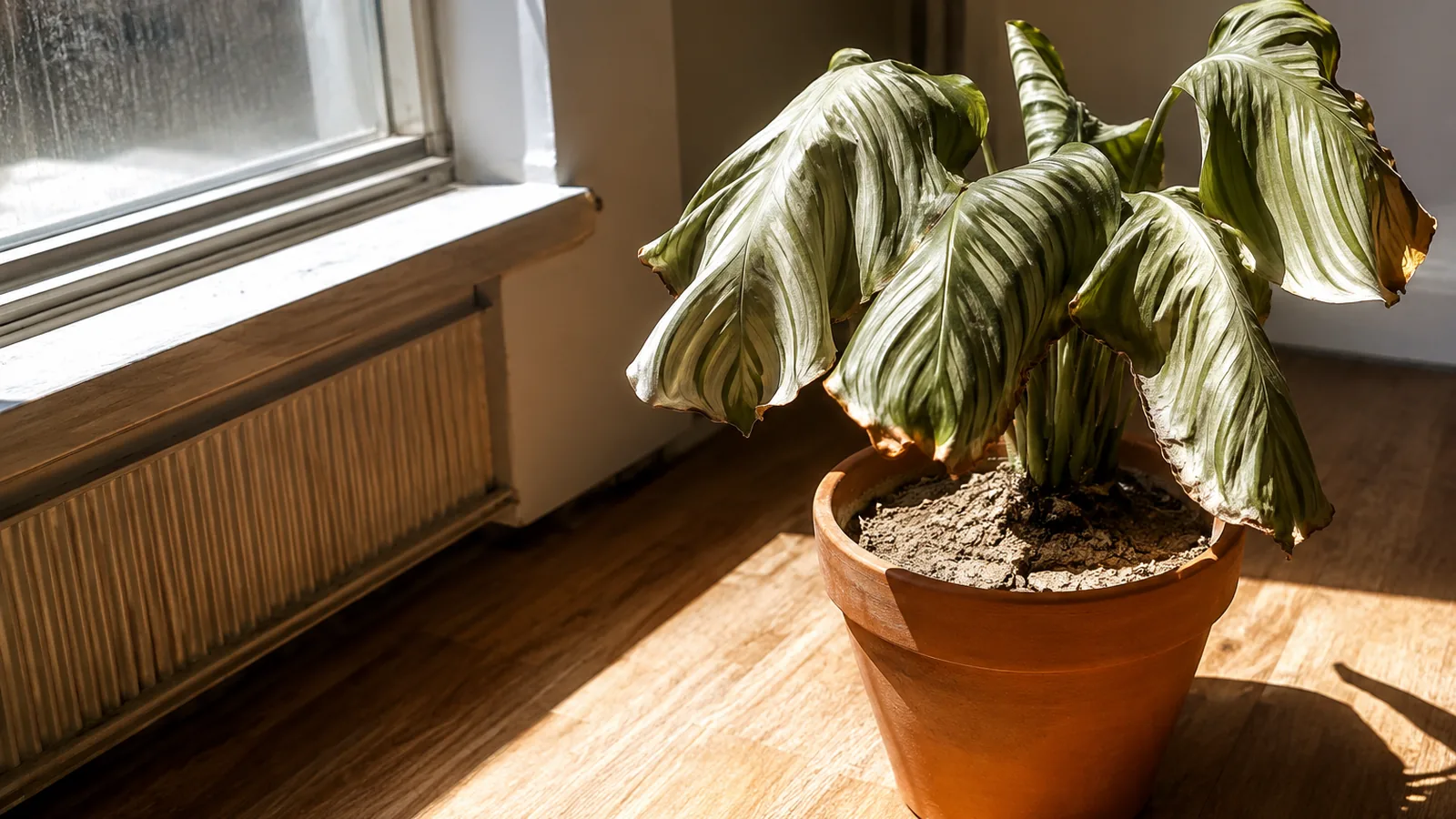
- Limp, drooping leaves in the middle of the day, even though the substrate is still moist: this is the classic sign. The plant transpires faster than it can absorb.
- Edges and tips turning brown and crispy (edge necrosis): air that’s too hot and dry burns the finest tissues.
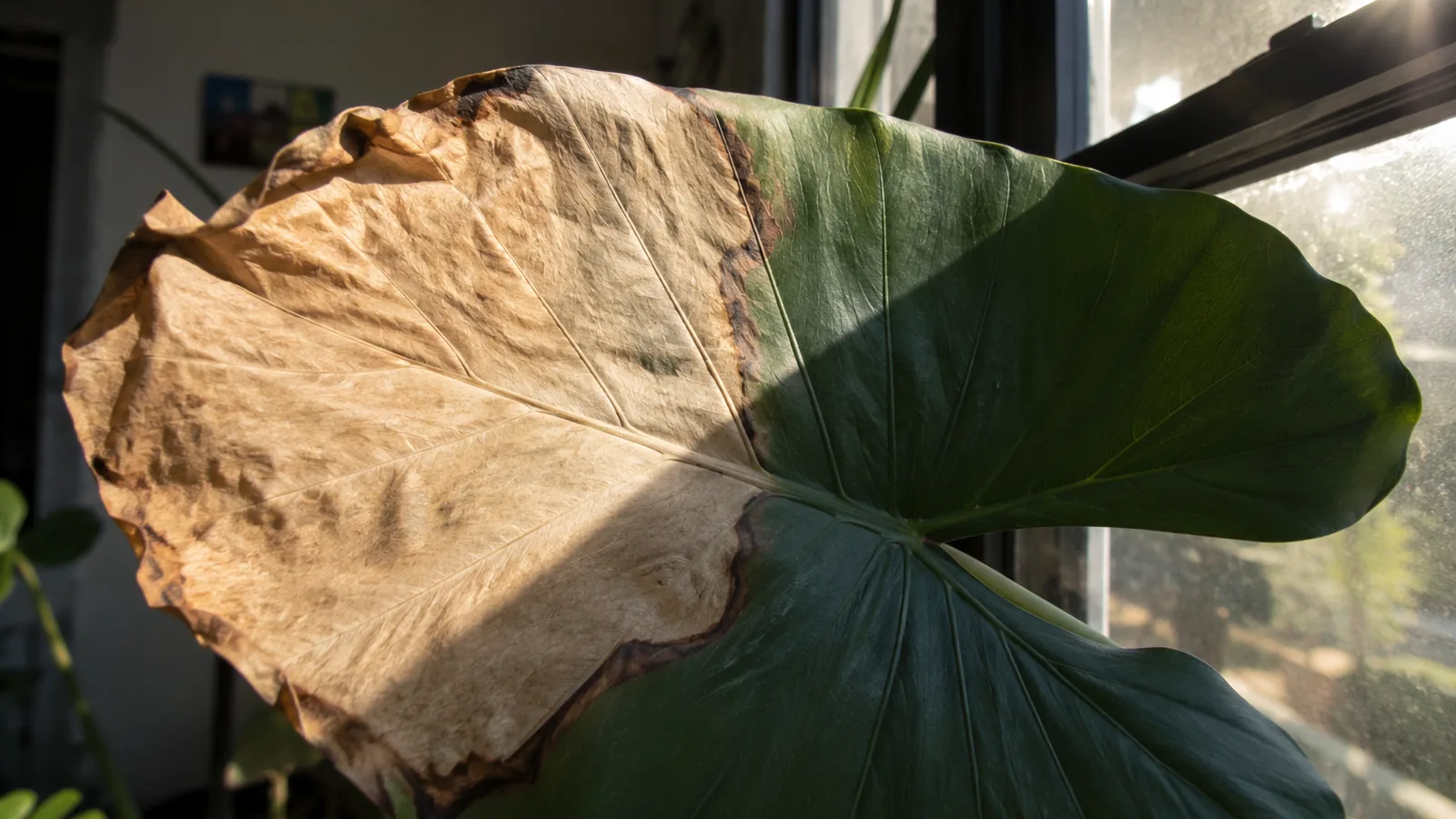
- Discolored patches, whitish or brown in the center of the leaf, especially on the window side: these are true leaf burns, caused by direct sun amplified through the glass.
- Sudden leaf drop, including healthy leaves: a defense mechanism to reduce the evaporating surface.
- Complete growth halt: no new leaves, flower buds aborting. The plant puts its growth on pause.
- Leaves curling inward (common on Calathea, Maranta) to limit the exposed surface.
Telling heat, thirst and overwatering apart
The classic trap: limp leaves can mean three opposite things. During a heatwave, always touch the substrate before drawing conclusions.
| Observation | Likely cause |
|---|---|
| Limp leaves + substrate still moist | Heat stress (excessive transpiration) |
| Limp leaves + substrate dry and light | Genuine lack of water |
| Limp leaves + substrate soggy, smelly | Overwatering / suffocating roots |
If the substrate is moist and the leaves droop during the hottest hours then perk back up in the evening, don’t water: this signals a plant managing the heat, not a thirsty one. To go deeper on reading leaf symptoms, our guide on yellow leaves and their causes details how not to confuse the signals.
Adapting Watering During Peak Heat
This is the trickiest point: during a heatwave, plants use more water, but watering wrong does more harm than waiting.
When to water: early morning or evening
Water in the morning before 9 a.m. or in the evening after 8 p.m., never in the middle of a scorching afternoon. Why?
- In the morning, the plant stocks up on water to face the day.
- In the evening, it rehydrates without immediate evaporation risk.
- During peak heat, water evaporates before reaching the roots, and a thermal shock between cool water and hot substrate can stress the root system.
How often
In normal conditions, many plants are watered every 7 to 10 days. During a heatwave, the rhythm can double for water-hungry species, while staying guided by one unchanging principle: always check before watering. Push a finger in 1 inch (2-3 cm). Dry? You can water. Still moist? Wait, even in the heat.
Plants in small terracotta pots dry out fastest (the porous pot evaporates), as do hanging baskets near the ceiling where the air is warmer. Watch those first. Conversely, succulents and cacti store water in their leaves and handle drought far better: don’t give in to the urge to water them more often, or you’ll risk rot.
Avoiding thermal shock
Use room-temperature water, never ice-cold. Cold water poured onto a hot substrate causes a clear root stress. Let your watering can sit for a few hours in the room before use. To master the fundamentals, our complete guide on when and how to water your plants remains your best ally all year round.
Managing Humidity and Ventilation
During a heatwave, indoor air often becomes hot AND dry, especially if you close everything to keep it cool. For tropical plants used to 60-80% humidity, that’s a double blow.
Raising ambient humidity
- Group your plants: they create a more humid microclimate by transpiring next to one another.
- Trays of moist clay pebbles under the pots: local evaporation raises humidity without waterlogging the roots.
- Air humidifier during the driest hours, aiming for 50-60%. It’s the most reliable solution for Calathea, Maranta, Alocasia and ferns.
- Damp towel placed near the plants: an effective backup trick.
Beware of misting
Misting can help, but never in direct sun or during hot hours: the droplets act like magnifying glasses and cause burns. Mist early in the morning, with non-calcareous water, on the plants that appreciate it — and avoid it entirely on fuzzy-leaved plants (some Begonia, Pilea) that rot easily.
Ventilate wisely
Completely stagnant, overheated air favors fungal diseases and the arrival of pests like spider mites, which love dry heat. Open up during cool hours (night, early morning) to refresh the air, but avoid scorching drafts during the day and especially the direct blast of an air conditioner or fan, which instantly dries out the foliage.
Shading and Moving Away from Scorching Windows
This is often the most effective measure — and the most overlooked.
The trap of south- and west-facing windows
Behind glass, solar radiation is concentrated and heat accumulates. A plant sitting on a south-facing windowsill can endure over 115 °F (45 °C) at leaf level in late afternoon. Even species that love bright light suffer from this direct contact.
- Move plants 3 to 6 feet (1-2 m) away from the most exposed windows during the heatwave.
- Filter the light with a sheer curtain, blind or light drape during the strongest hours (noon to 6 p.m.).
- Keep foliage from touching the glass: a leaf pressed against heated glass burns within hours.
Understanding each plant’s real light needs prevents mistakes: our complete guide to indoor plant light explains how to measure intensity in your home and spot risky exposures in summer. The SPRAIA app even includes a light meter that tells you in real time whether a spot is too bright or too hot for the species in question.
Creating temporary shade
A simple translucent white curtain or a shade cloth cuts light intensity by 30 to 50% without plunging the room into darkness. You can also temporarily move your most fragile plants to a cooler, less-exposed room (hallway, bright bathroom, north-facing room).
Mistakes to Absolutely Avoid During a Heatwave
Under the heat, some well-meaning reflexes do more harm than good.
Don’t repot
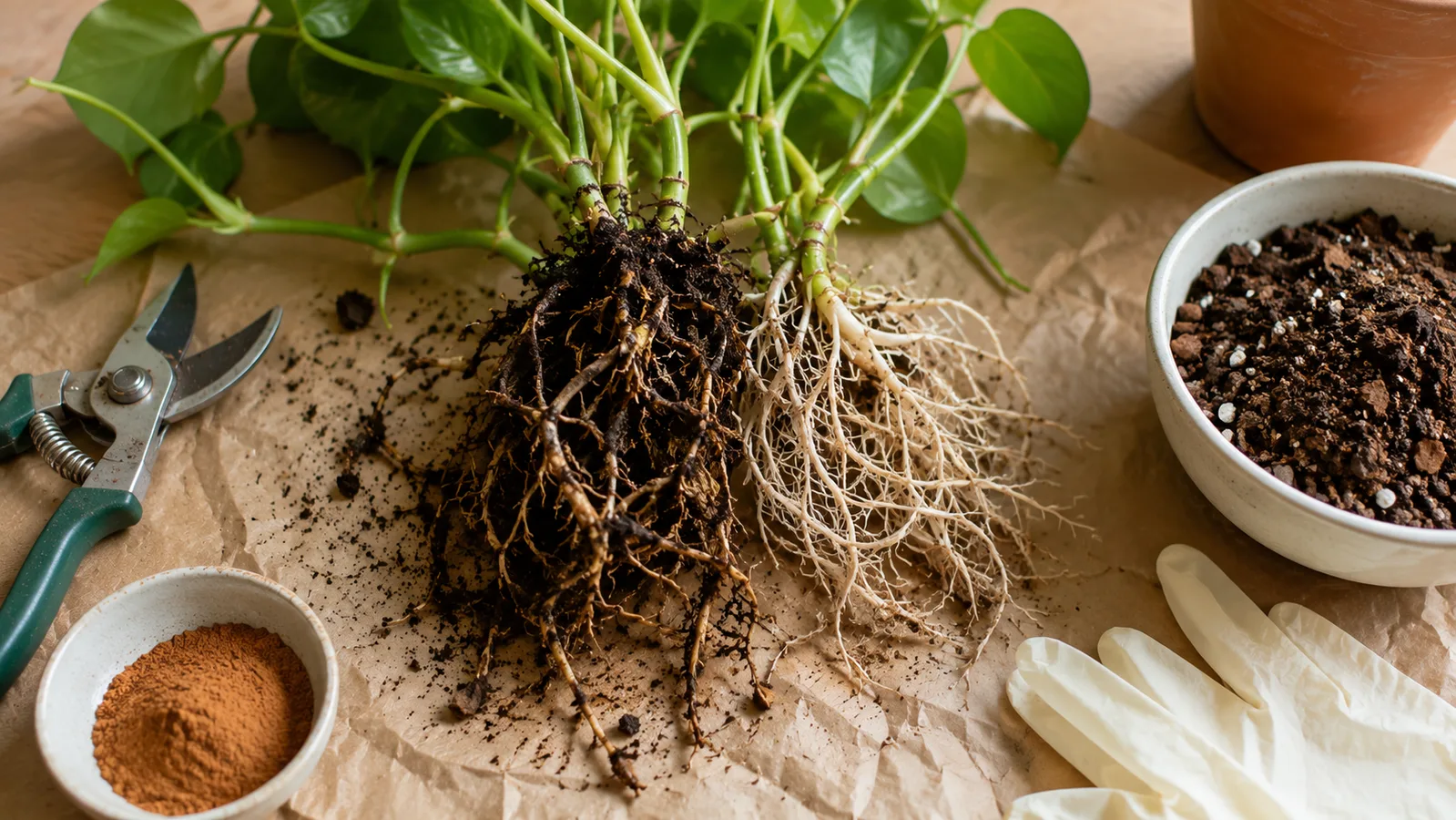
Repotting always injures the roots a little, which then need to heal and restart. During a heatwave, the plant has no energy for this: it’s in survival mode. Wait for normal temperatures to return and, ideally, spring or early autumn.
Don’t fertilize
Fertilizer pushes the plant to produce growth — exactly what it can’t do while fighting the heat. Worse, mineral salts concentrated in a fast-drying substrate burn the roots. Suspend all feeding during the heatwave and resume only once the plant has restarted.
Don’t use ice-cold water
The thermal shock between cold water and a hot substrate stresses the roots and can slow absorption. Always use room-temperature water.
Don’t mist in the sun
We repeat it because it’s the most common mistake: misting foliage exposed to direct sun creates spot-shaped burns. Reserve misting for cool hours and shade.
Don’t move plants abruptly into full sun
A plant used to partial shade, suddenly moved into full sun “to get some air,” fries in a single day. Any change of exposure must be gradual, over one to two weeks.
The Case of Plants Moved Outdoors
Many people move their plants onto the balcony or patio in summer. It’s excellent for growth… except during a heatwave.
- Bring in or shade plants exposed to direct midday sun. A concrete balcony reflects heat and can exceed 120 °F (50 °C) at ground level.
- Watch for express drying: outdoors, with wind and sun, a pot can empty of water in half a day.
- Protect from hot wind, as drying as a hairdryer on the foliage.
- Check for pests: outdoor heat attracts spider mites and thrips, which will then follow the plant back indoors.
If you’re going on vacation during the heatwave, logistics get complicated: our guide on keeping your plants alive during vacation offers self-watering and grouping solutions that are especially useful in summer.
Getting Back to Normal After the Heatwave
Once the heat wave has passed, don’t rush: the plant needs time to recover.
- Don’t cut everything right away. Wait to see which leaves bounce back and which are permanently lost. A partially burned leaf keeps photosynthesizing.
- Resume regular watering at the usual rhythm, always checking the substrate.
- Wait one to two weeks before resuming fertilization, at a reduced dose at first.
- Gradually reposition the plants you moved back toward their original bright spot.
- Cut off completely dry leaves once recovery is confirmed, to focus energy on new growth.
Most tropical plants are resilient: even after marked stress, they push out fresh healthy leaves as soon as conditions become mild again. Keeping a growth journal (the SPRAIA app offers one with time-stamped photos) helps you objectively track recovery, week after week, rather than relying on a vague impression.
Frequently Asked Questions — Plants and Heatwaves
The most common questions about protecting houseplants during extreme heat.
- Often yes, because evaporation speeds up, but never without checking. Push a finger in 1 inch (2-3 cm): water only if it's dry. Limp leaves with still-moist substrate signal heat stress, not thirst — in that case, don't add water, or you'll risk root rot. Water early in the morning or in the evening, with room-temperature water.
- No, it's a normal heat defense mechanism. The plant limits its evaporating surface during hot hours and swells back up once the temperature drops. As long as the substrate is properly moist and the leaves recover in the evening, don't change your watering. Instead, help by moving it away from the windows and raising the ambient humidity.
- Yes, but only early in the morning, in the shade, with non-calcareous water. Never in direct sun or during hot hours: the droplets act like magnifying glasses and burn the foliage. A humidifier or trays of moist clay pebbles are safer, longer-lasting solutions for raising humidity around your tropical plants.
- Because the plant is in survival mode: it isn't trying to grow but to limit its losses. Repotting injures roots it doesn't have the energy to repair, and fertilizer, concentrated in a fast-drying substrate, burns the roots instead of feeding them. Wait for normal temperatures to return, then gradually resume feeding and then repotting.
- A leaf whose part has turned white, dry and brittle is irreversibly burned in that area: the tissue won't turn green again. But if the rest of the leaf is green and supple, keep it — it keeps photosynthesizing. Only cut off fully dry leaves, and only once the heatwave has passed, to avoid weakening the plant further.
Conclusion: Getting Through the Heatwave Without Panic
A heat wave isn’t a death sentence for your plants. The essentials come down to a few reflexes: check before watering, water during cool hours with room-temperature water, raise the humidity, keep foliage away from scorching windows, and refrain from any stimulating move (repotting, fertilizer) as long as the heat lasts. By protecting rather than overreacting, you let your plants manage their own survival mode.
The SPRAIA app supports you through these episodes: the light meter spots spots that have become too hot, the photo diagnosis distinguishes a heat spell from a deficiency, and season-adapted watering reminders prevent both excess and lack of water. Your indoor plant babies will sail through the summer in great shape.