Statement Houseplants XXL: Elevate Your Space With Large Indoor Plants
2026 decor trend: XXL plants transform a room. Our top 10 picks, placement tips, care advice, budget and style inspirations to make a statement.
By SPRAIA editorial team · Method: botanical sources, field feedback and editorial validation
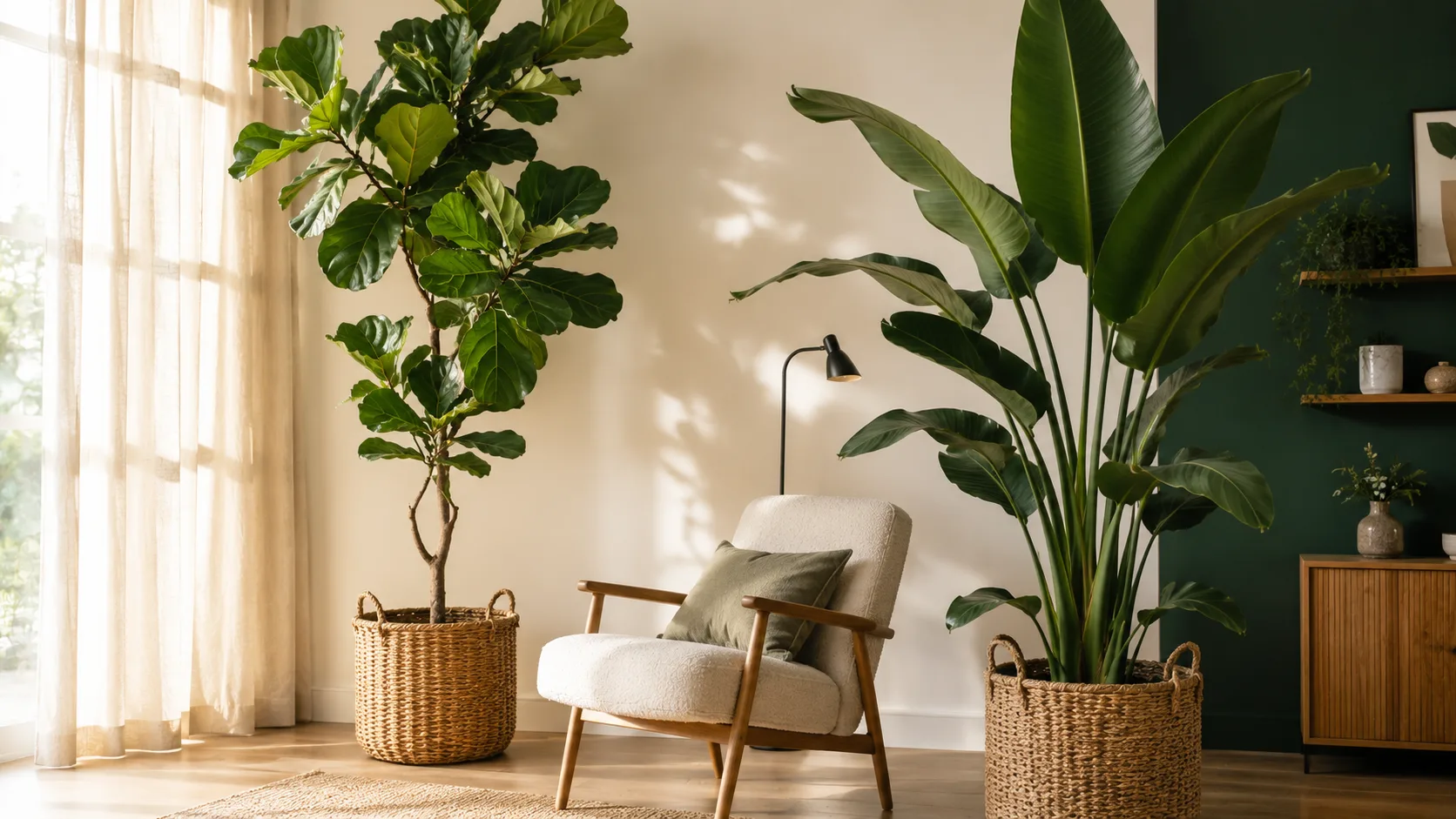
One XXL plant changes everything in a living room. Where ten small plants sprinkled across shelves merely decorate, a single large specimen — a Ficus lyrata grazing the ceiling, a Strelitzia unfurling enormous tropical leaves, a mature Monstera with sculptural fenestrations — becomes the centrepiece that structures the room, draws the eye, and tells a story. This is the big decor trend of 2026: the “big leaf moment” is taking over Instagram, Pinterest, and design magazines. But pulling off a statement plant takes more than a checkout-aisle impulse. Here’s how to choose, place, and care for your XXL plants to transform your space for the long haul.
Why XXL plants are booming in 2026
After years of densely packed “plant walls” and mini-jungles on every surface, the trend is paring back. We keep the jungle spirit, but now we embody it in one or two genuinely imposing plants. Several factors explain the shift:
- The return of slow decor: a real living piece of furniture beats ten anonymous plants.
- The influence of japandi and wabi-sabi: less, but better. One plant per room, chosen for its silhouette.
- Remote work: we spend more time at home and invest in defining elements.
- Biophilic benefits: a big plant regulates humidity, lightly purifies the air, and measurably calms the nervous system.
An XXL plant is no longer an accessory — it’s a full-on decor and wellbeing investment.
What turns a plant into an XXL specimen?
A plant doesn’t spontaneously reach imposing dimensions indoors. Three factors determine its ability to become a statement subject:
1. Available light
By far the number one factor. A plant in low light stays small for years. Conversely, a plant placed near a large south-east or west-facing window can double in volume in a single season. Our complete light guide helps you assess what your home actually offers.
2. An evolving pot
A plant can’t grow if its roots are choking. To reach XXL size, plan to repot your specimen every 2 to 3 years into a pot 3 to 5 cm larger in diameter. The right final pot, for a 2-metre plant, is often 35-45 cm in diameter and 35-40 cm deep.
Our repotting guide walks you through this critical operation.
3. The right support
Many large houseplants (Monstera, Philodendron, giant Pothos) are climbers in the wild. Without a moss pole to cling to, they stay bushy and compact. A 1.2 to 1.8 m pole lets the plant climb upward and develop larger, more mature leaves.
Our top 10 XXL statement plants
1. Monstera deliciosa
The undisputed star. Its leaves reach 60-80 cm on a mature specimen with those famous sculptural fenestrations. Fast growth in good light. Our complete Monstera guide covers all the care.
2. Ficus lyrata
The “fiddle leaf fig”, interior designers’ darling for a decade. Graphic silhouette, huge violin-shaped leaves, can reach 2.5 m indoors. Demands constant bright light and few relocations.
3. Strelitzia nicolai
The giant bird of paradise. Its 1-metre banana-like leaves create instant tropical drama. Grows fast in abundant light, can exceed 2.5 m. Perfect for very bright, high-ceilinged rooms.
4. Dracaena marginata
The apartment “fake palm”. Twisty silhouette, fine plume-like leaves. Very tough, can reach 2 to 3 m, tolerates moderate light conditions.
5. Kentia (Howea forsteriana)
The indoor palm par excellence. Elegant, graceful, can live 50 years and reach 3 m. Tolerates moderate light, ideal for an entryway or reading nook.
6. Areca (Dypsis lutescens)
More exuberant than the Kentia, with arching apple-green fronds. Faster growth, guaranteed tropical resort vibe. Loves humidity.
7. Alocasia macrorrhiza
The giant elephant ear leaves. Spectacular but demanding in humidity and light. Our Alocasia guide covers conditions for success.
8. Philodendron Selloum / bipinnatifidum
Giant bush with deeply cut, highly architectural leaves. Can reach 1.5 m tall and 2 m wide. Our Philodendron species guide lists the most impressive species.
9. Ficus elastica
The rubber plant, thick glossy leaves, fast upright growth. Our Ficus elastica guide explains how to prune for a denser silhouette or let it climb as a column.
10. Schefflera amate or Sansevieria masoniana
The Schefflera amate offers glossy palmate leaves and an imposing bushy growth. For lovers of more graphic silhouettes, the Sansevieria masoniana (“whale fin”) delivers a single immense vertical leaf, almost sculptural.
Where to place an XXL plant?
A big plant in the wrong spot loses all impact — or worse, declines fast. The golden rules:
Favour bright corners
Ideal: a room corner 1-2 m from a south, east, or west-facing window. A Strelitzia or Ficus lyrata becomes the centrepiece when placed in an angle bathed in natural light.
Get the staging right
- Statement pot: a terracotta, dark ceramic, or woven rattan cover pot transforms the visual impact.
- Solo or in composition: an XXL plant often stands alone, but can be paired with a smaller plant (Sansevieria, Pilea) at its base to anchor it.
- Height: lift onto a wooden or ceramic pedestal to gain 20-30 cm visual presence.
Avoid traps
- Not in front of a radiator (air too dry).
- Not in a cold draught.
- Not in a traffic path where you brush past constantly (leaves break).
Specific care for a large plant
An XXL plant isn’t just a bigger version of a normal plant — it needs adapted habits.
Regular rotation
Turn your plant a quarter turn every 2-3 weeks to prevent it from leaning awkwardly toward the light.
Dusting the leaves
A dusty large leaf loses up to 30% of its photosynthetic capacity. Regularly wipe Ficus, Monstera, and Strelitzia leaves with a damp cloth. It’s also an excellent opportunity to inspect leaf undersides for pests.
Moss pole training
For climbers (Monstera, Philodendron), a moss pole kept damp stimulates aerial root production and thus larger leaves. Choose an extendable pole to follow growth.
Periodic repotting
Every 2 to 3 years in spring, into a pot 3-5 cm larger. For very mature specimens that can no longer change pots, do top-dressing: remove the top 3-4 cm of substrate and replace with fresh mix enriched with compost.
A realistic budget for an XXL plant
A specimen already at XXL size is expensive, sometimes very expensive:
- Young Monstera deliciosa (50-70 cm): $30-50.
- Mature XXL Monstera (1.5-2 m, multiple fenestrated leaves): $170-350.
- Young Ficus lyrata (80 cm): $40-70.
- Mature 2 m Ficus lyrata: $220-450.
- Strelitzia nicolai 1.8 m: $170-350.
- Kentia 1.8 m: $220-500.
- Mature Alocasia macrorrhiza: $110-280.
The smart strategy: buy young and let it grow. With good conditions, a 50 cm Monstera becomes a 1.8 m specimen in 3 years. Patience rewarded with $200+ in savings.
Where to buy?
- Specialist houseplant nurseries: superior quality, real advice, often cheaper than chain garden centres.
- Seasonal plant markets: exceptional specimens at hobbyist prices.
- Private resales: great deals on mature specimens, but inspect plant health carefully.
- Online specialists: convenient but watch shipping costs and transport stress on very large specimens.
Style inspirations
Bohemian
Go for vertical abundance: Strelitzia, Areca, hanging Philodendron, woven rattan baskets, macramé. Mix sizes and textures. Our rare plants for collectors round-up also covers unusual species that elevate a boho interior.
Scandinavian
One plant per room, clean lines: Ficus lyrata, Sansevieria masoniana, beige or cream cover pot, pale wood pedestal.
Japandi
Graphic, zen silhouettes: Kentia, Dracaena marginata, Sansevieria in a dark terracotta pot. Space around the plant, no clutter.
Minimalist
A single imposing specimen, sober pot, neutral wall background, plant elevated like an artwork. Burgundy Ficus elastica or mature Monstera work wonders.
Conclusion: the plant that changes everything
Investing in an XXL statement plant means choosing a lasting living companion. Properly placed and cared for, it will accompany your home for 10, 20, sometimes 50 years. It will grow with you, gain new leaves each season, become the element your guests notice first. Choose according to your available light, your lifestyle (easy palm vs demanding Alocasia), and give it the pot, light, and fertiliser it deserves. You’ll quickly understand why a single large plant replaces twenty small ones with style.
Frequently asked questions
- It depends enormously on the species and conditions. A Monstera deliciosa can go from 50 cm to 1.8 m in 3 years in bright light. A Ficus lyrata typically takes 5-7 years to reach 2 m. A Kentia, slower, needs 10-15 years to become truly imposing.
- The Dracaena marginata and the Kentia are the most forgiving: they tolerate moderate light, handle forgotten waterings, and resist dry indoor air. The Monstera deliciosa is also very accessible if you have bright indirect light.
- Not always. The Ficus lyrata, Dracaena, and Kentia tolerate dry indoor air. The Alocasia macrorrhiza and Strelitzia, however, appreciate humidity ≥ 50%, especially in heated winters.
- As little as possible. Many large plants (Ficus lyrata especially) handle location changes poorly and can drop leaves. Choose your spot carefully at purchase and limit yourself to quarter-turn rotations.
- Wrap the plant in a large sleeve or open cardboard box to protect the leaves. Keep it horizontal in the boot if possible, wedging the pot. Avoid mid-winter or heatwave transport — thermal shock is enemy number one.